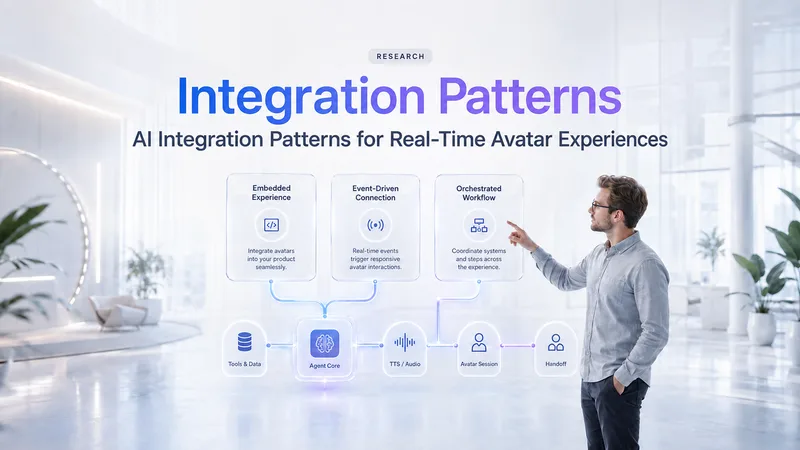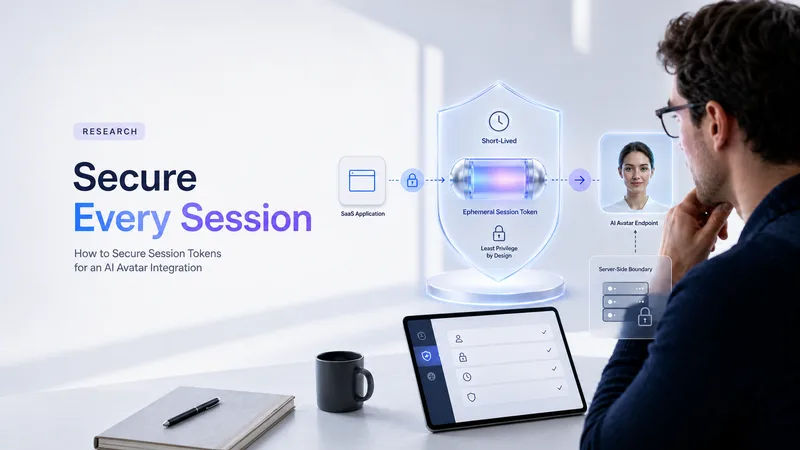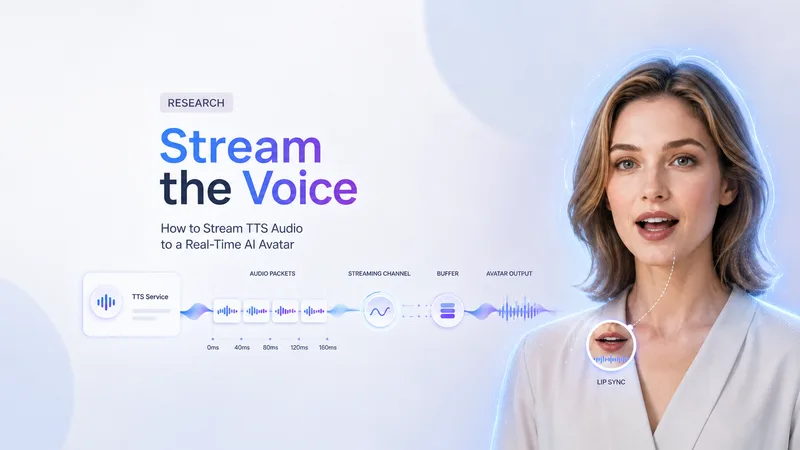
Over the last several weeks, Spatius has expanded in three directions that matter when an avatar moves from a demo into a product: automation, network efficiency, and production operations.
Teams enrolled in the Spatius API private beta can create and manage Avatars programmatically. AvatarKit 1.3 brings more efficient audio delivery, automatic region selection, and tighter playback controls across client platforms. The latest @spatius/avatarkit-rtc package is compatible with the documented livekit-client peer range, and Spatius Motion Server now publishes higher-quality audio to the LiveKit room. The Spatius plugin is maintained in the official LiveKit Agents repository, where it uses Ogg Opus by default.
Key takeaways
- The Spatius API private beta can create an Avatar from an image URL, expose its asynchronous job state, and list or retrieve the resulting Avatar resources for enrolled teams.
- AvatarKit 1.3 makes audio delivery more efficient, simplifies region selection, and improves playback across client platforms.
- Python SDK 1.0.5 makes server-side integrations easier to configure and more flexible to operate.
- The maintained Spatius plugin lives in the
livekit/agentsmonorepo. Version 1.7.0 was published on August 20. - The latest
@spatius/avatarkit-rtcpackage is compatible with the latestlivekit-clientversion, and native and Web RTC adapters plus new scenario demos for Web, Android, and iOS make it easier to test the same avatar experience across product surfaces.
Release summary
| Date | Release | What changed |
|---|---|---|
| July 25 | Spatius API documentation | Programmatic Avatar creation, retrieval, listing, and asynchronous creation jobs |
| August 7 | AvatarKit iOS 1.3.3 | More efficient audio, simpler region selection, and smoother playback |
| August 10 | LiveKit Agents plugin update | Ogg Opus became the default audio format for the Spatius plugin |
| August 16 | Python SDK 1.0.5 | Easier setup and more flexible server-side audio handling |
| August 17 | Client and RTC releases | Web AvatarKit 1.3.7, Web RTC adapter 1.1.3 compatible with livekit-client ^2.15.9, and the stable iOS RTC adapter |
| August 20 | LiveKit Agents 1.7.0 | The maintained Spatius plugin shipped with the LiveKit Agents 1.7 release line |
Publication dates establish when a package or documentation surface became public. They do not imply that every SDK has identical APIs. Use the current SDK capability matrix when comparing Web, iOS, Android, Flutter, Python, and Go.
Create and manage Avatars through the API
The most visible platform addition is the private-beta API for Avatar resources. Access is currently limited to enrolled teams; previously, a team preparing a custom Avatar generally treated creation as a Studio workflow. The new endpoints make that workflow automatable for approved integrations.
An application can now:
- Submit a public JPEG or PNG URL to
POST /v1/open/avatars. - Receive a creation job in the
queuedstate. - Poll
GET /avatar-jobs/{jobId}until the job succeeds or fails. - Use the returned
avatarIdanywhere a Spatius SDK integration accepts an Avatar ID. - List and retrieve both Avatars and creation jobs for operational tooling.
See the Create an Avatar endpoint for the request schema and the API errors and limits page for retryable and non-retryable failures.
This changes the product boundary for enrolled teams. A customer-support platform can create a branded Avatar during tenant onboarding once its API access is approved. A learning product can prepare teacher characters from an approved asset pipeline. An internal operations tool can display job status without asking someone to switch into Studio. The API does not remove Studio; it makes the same Avatar resource usable in approved automated workflows.
AvatarKit 1.3 makes real-time sessions feel smoother
AvatarKit 1.3 brings a collection of practical improvements for everyday use. Audio can travel more efficiently, automatic region selection reduces setup, and updated playback controls help voice and motion stay in sync across Web, iOS, Android, and Flutter.
For iOS teams, AvatarKit 1.3.3 focuses on smoother playback, more reliable connections, and easier RTC integration. Rather than listing every implementation detail here, the AvatarKit iOS 1.3.3 release notes provide the complete list of fixes and migration notes. Teams with specific routing or residency requirements can also consult the regions reference.
Server SDKs are easier to run in production
The latest Backend Mode releases are designed to make server-side integrations simpler and more dependable. Python SDK 1.0.5 improves automatic region setup, adds more flexibility when starting a session, and supports a wider range of audio workflows.
Go SDK 1.0.3 focuses on more reliable, higher-quality audio handling. The linked release notes are the source of truth for the complete change lists and upgrade details.
The LiveKit plugin now lives with LiveKit Agents
The Spatius plugin is now maintained in the official livekit/agents repository, alongside the Agent Framework it works with. The installable package name remains livekit-plugins-spatius.
Since the move, the plugin has adopted more efficient audio by default, aligned with the latest Spatius server SDK, and shipped with LiveKit Agents 1.7.0. See the LiveKit Agents 1.7.0 release notes for the complete release history.
For teams already using LiveKit, the product boundary stays familiar: LiveKit manages the voice agent and room, while Spatius provides the Avatar’s motion and visual experience. The LiveKit Agents integration guide walks through the setup.
Spatius motion server now publishes improved audio quality to the LiveKit room. This gives connected participants a cleaner audio track while the client continues to render the Avatar locally from the room’s motion data.
RTC adapters and demos are easier to evaluate
The Web packages continued to move during August. @spatius/avatarkit reached 1.3.7 and @spatius/avatarkit-rtc reached 1.1.3 on August 17. The latest @spatius/avatarkit-rtc package is compatible with the latest livekit-client release; the current package set pairs it with livekit-client ^2.15.9. This makes it easier for LiveKit teams to keep both sides of their Web integration current.
On the same date, the iOS RTC adapter reached its stable 1.0.0 release, making it easier to deliver the same room-based Avatar experience on iOS with smoother playback and transitions.
A new AvatarKit Scenes Demo makes the product boundary visible in complete examples rather than isolated API calls. The repository contains Web, Android, and iOS implementations of four scenarios:
- one-on-one tutoring;
- live streaming with chat and audience interactions;
- bank customer service with topics, search, cards, and voice; and
- a companion experience with a persistent persona.
The shared backend can run a local LiveKit agent or use Agora Conversational AI. That makes the repository useful for comparing transports without redesigning the product experience for each client.
Upgrade checklist
For an existing integration, treat this as a controlled runtime upgrade rather than a package-number exercise.
- Identify the integration path you use today: Direct Mode, Backend Mode, LiveKit Agents, or Agora Conversational AI.
- Read the release notes for each SDK you plan to update. They are the source of truth for compatibility and migration details.
- Upgrade one client platform at a time, then test voice, motion, interruptions, and reconnection on the devices and networks your users rely on.
- Verify automatic region selection against any residency or routing requirements.
- For LiveKit, upgrade
@spatius/avatarkit-rtcandlivekit-clienttogether and follow the plugin in the officiallivekit/agentsrepository.
What has not changed
Spatius remains the real-time visual layer, not a bundled conversation stack. Your application, agent framework, or backend still owns ASR, LLM, TTS, prompts, tools, permissions, conversation policy, and human handoff. Spatius receives the audio the Avatar should speak, produces motion data, and lets AvatarKit render the result locally.
That stable boundary is what connects the updates in this release. The new API automates Avatar resources. Opus and automatic regions improve delivery. Updated RTC packages make the Web integration easier to keep current. LiveKit integrations fit the same visual layer into agent and room architectures without taking ownership of them.
Frequently asked questions
Where is the maintained Spatius plugin for LiveKit Agents?
It is maintained in the official livekit/agents monorepo under livekit-plugins/livekit-plugins-spatius. The installable package remains livekit-plugins-spatius.
Does the new Avatar API replace Spatius Studio?
No. The API adds a programmatic path for creating, listing, and retrieving the same Avatar resources. Studio remains the visual management interface.
Does AvatarKit 1.3 require every application to use Opus?
No. AvatarKit 1.3 adds a more efficient audio path, but teams can plan the upgrade around their existing integration. Follow the release notes for the exact behavior on each platform.
Does Spatius now provide the LLM, TTS, and agent tools?
No. Spatius remains the Avatar presentation layer. The application or agent framework owns reasoning, speech generation, tools, permissions, and conversation policy.
Review the current SDK references open Spatius Studio, or ,或read the developer documentation, or ,或try the Playground.。