Product notes, technical guides, independent comparisons, and research for teams building real-time AI avatars.
All articles · Page 8
126 articles
AI Avatar for Education: How AI Tutors Scale to Millions
How edge rendering architecture enables AI avatar tutors to scale to millions of students — slashing bandwidth by 98%, cutting costs to $0.36/hour, and meeting COPPA, FERPA, and UK AADC child privacy compliance requirements.
Research & benchmarks··14 min
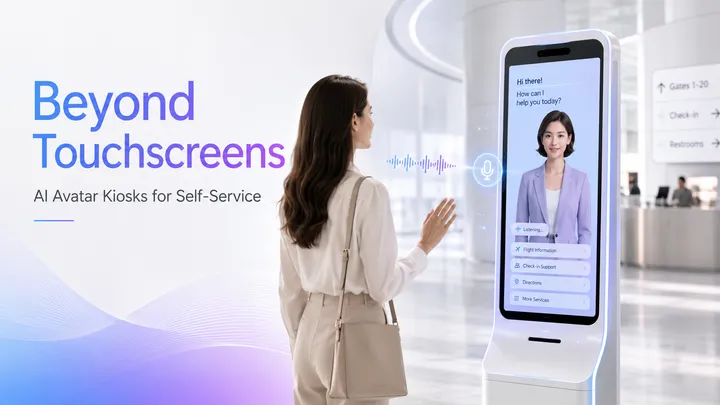
Beyond Touchscreens: How AI Avatar Kiosks Create Human-Like Self-Service Experiences
AI avatar kiosks replace frustrating button trees with natural voice conversation, cutting bandwidth by 95% and operating costs to $0.36/hour through edge rendering. Explore how retail, hospitality, and healthcare deploy lifelike digital humans at scale.
Research & benchmarks··10 min
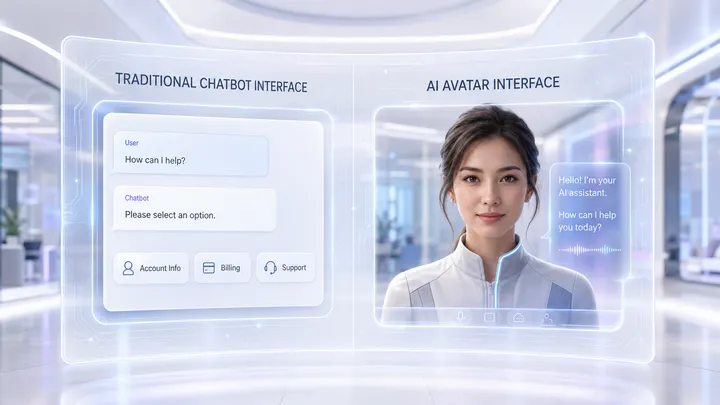
AI Avatar vs Chatbot: Why Businesses Are Moving Beyond Traditional AI Conversations
Businesses are moving beyond AI chatbots toward real-time AI avatars that can add visual presence and guided interaction. Explore the three core pillars driving this shift and the infrastructure choices that matter for scalable deployments.
Research & benchmarks··9 min
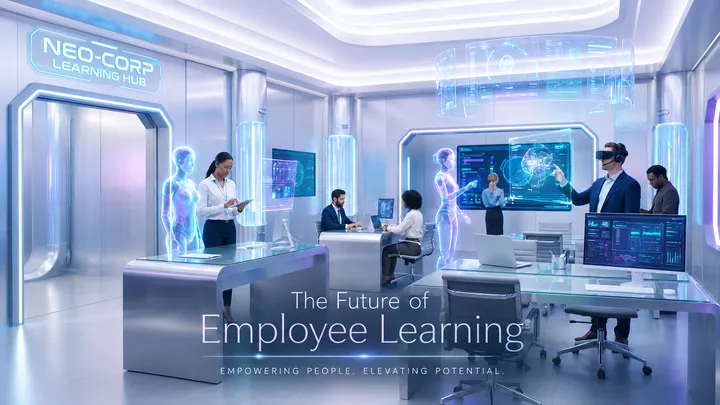
AI Avatars for Corporate Training: The Future of Employee Learning
Discover how real-time AI avatars transform corporate training from passive video watching to interactive, cost-effective employee learning — with 75% higher retention, 70–90% lower production costs, and $0.36/hour edge rendering.
Research & benchmarks··12 min
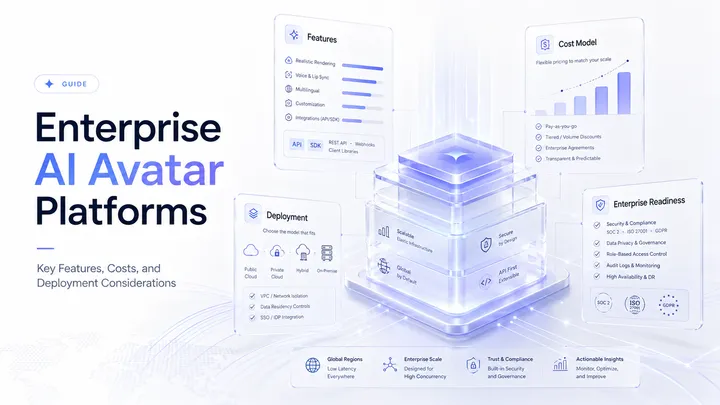
Enterprise AI Avatar Platforms: Key Features, Costs, and Deployment Considerations
Enterprise AI avatar platforms have shifted from asynchronous video generation to real-time conversational agents. Learn how cloud-edge hybrid architecture cuts costs from $2.00–$5.00+/hour to $0.36/hour, and what features, deployment models, and pricing structures matter for production deployments.
Research & benchmarks··10 min
How to Add an Avatar to an AI Agent: Developer Guide (2026)
A practical developer guide to adding a real-time avatar to an existing AI agent without replacing its LLM, tools, speech stack, memory, or business logic.
Engineering··9 min
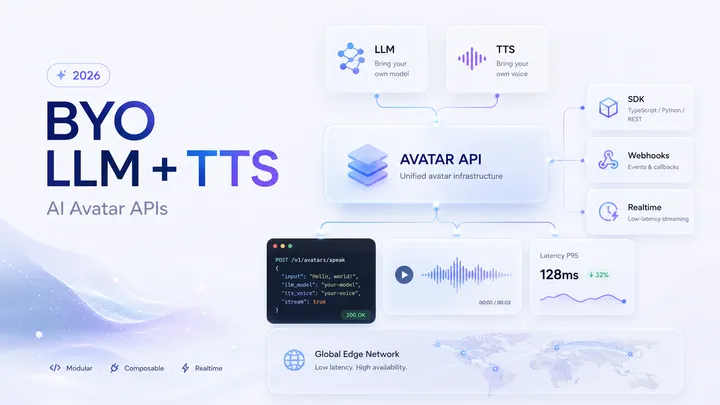
Best AI Avatar APIs for Bring Your Own LLM & TTS (2026)
Compare Spatius, Anam, Tavus, LemonSlice and D-ID for bring-your-own LLM and TTS: how each accepts your stack, where the avatar is drawn, and what 1,000 or 3,000 minutes a month cost.
Research & benchmarks··9 min
Best AI Avatar APIs for Mobile Apps in 2026: Technical Evaluation & Comparison
A technical evaluation of the top AI avatar APIs for mobile apps in 2026 — comparing Tavus, Spatius, D-ID, HeyGen, Synthesia, and DeepBrain AI across latency, bandwidth efficiency, native SDK support, and per-minute cost structures.
Research & benchmarks··14 min
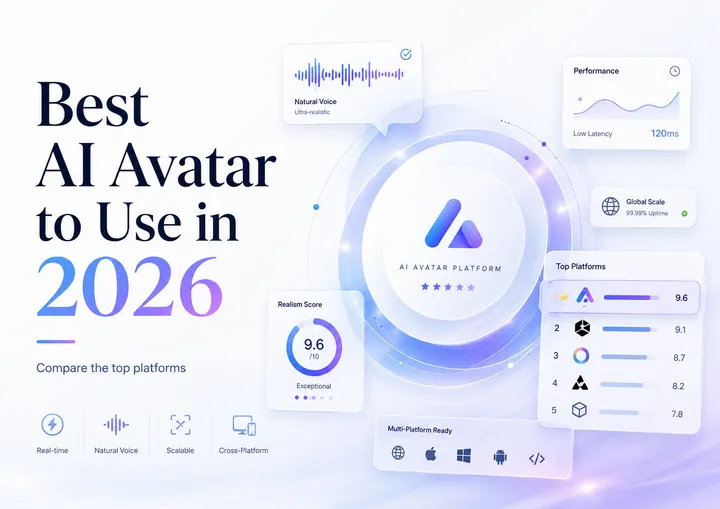
Best AI Avatar Platforms to Use in 2026
Compare Spatius, Anam, Tavus, D-ID, and HeyGen across real-time performance, customization, device support, pricing, and use cases in 2026.
Research & benchmarks··10 min
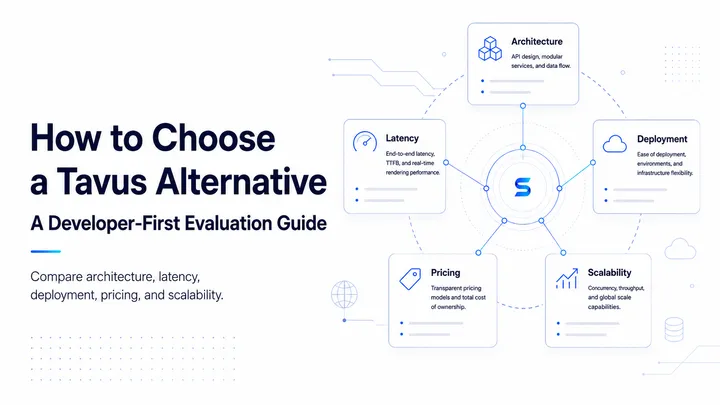
How to Choose a Tavus Alternative in 2026: Developer Guide
Evaluate Tavus alternatives by architecture, latency, deployment, bandwidth, scalability, and cost. Compare Spatius, Anam, D-ID, and async video tools.
Research & benchmarks··16 min
5 Best LiveAvatar Alternatives for Real-Time Avatars (2026)
Compare five leading LiveAvatar alternatives for real-time AI avatars in 2026, including Spatius, Tavus, Simli, Anam, and D-ID Agents.
Research & benchmarks··16 min
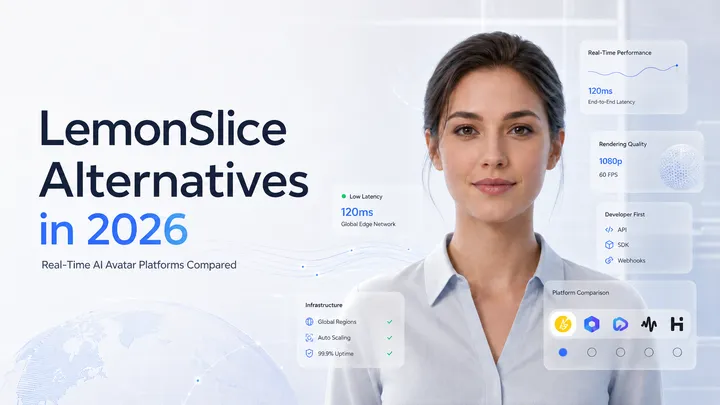
LemonSlice Alternatives in 2026: Real-Time AI Avatar Platforms Compared
Spatius and LemonSlice take fundamentally different approaches to real-time AI avatars — Spatius uses a cloud-edge hybrid architecture streaming approximately 10–20 KB/s control data for on-device rendering, while LemonSlice generates every frame on cloud GPUs with its 20B-parameter LemonSlice-2.1 model and streams the result to the client as video.