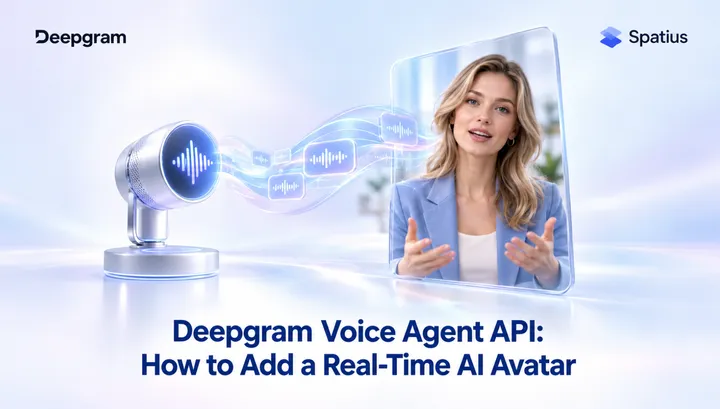
Deepgram Voice Agent API: How to Add a Real-Time AI Avatar
Connect Deepgram Voice Agent output audio to a Spatius real-time avatar while keeping tools, session state, interruption policy, and product UI in your application.

Product notes, technical guides, independent comparisons, and research for teams building real-time AI avatars.
Build an Audio2Face avatar pipeline, understand GPU, rigging, rendering, and lifecycle work, and compare the architecture with Spatius.

Learn where a Spatius avatar fits around a Retell AI web voice agent, what the current SDK exposes, and why production motion needs contiguous assistant audio.

Learn how to route Hume AI EVI output audio to Spatius Motion Server and render a synchronized real-time avatar with AvatarKit.

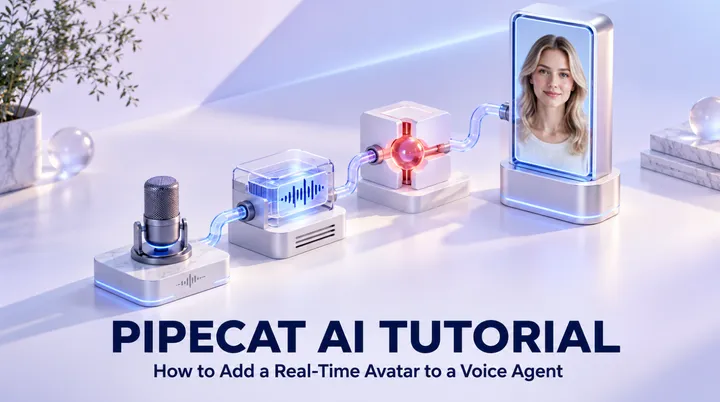
Connect Pipecat bot output audio to a real-time avatar while keeping Pipecat in control of STT, LLM, tools, TTS, transport, and interruptions.
Connect OpenAI Realtime API output audio to a real-time AI avatar while keeping the existing agent, tools, turn-taking, and voice architecture intact.
An August 2026 roundup of the new Spatius Avatar API, AvatarKit 1.3, server SDK, LiveKit Agents integration, and cross-platform demo updates.

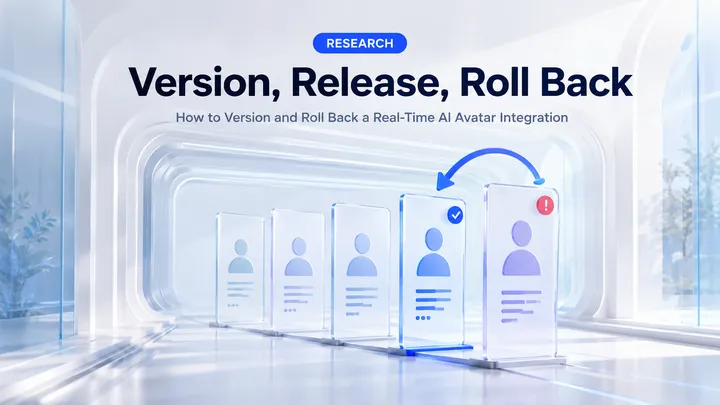
Version and roll back an AI avatar integration across SDKs, assets, application contracts, feature flags, staged releases, compatibility tests, and cached clients.
Test a real-time AI avatar on low-end phones and laptops across startup, frame pacing, memory, thermals, battery, interruption, and recovery.

Load AI avatar assets without delaying the core SaaS interface by separating critical resources, staged preparation, caching, decoding, and renderer startup.

Load test a real-time AI avatar across connection setup, sustained sessions, audio and motion traffic, recovery, device behavior, and service limits.

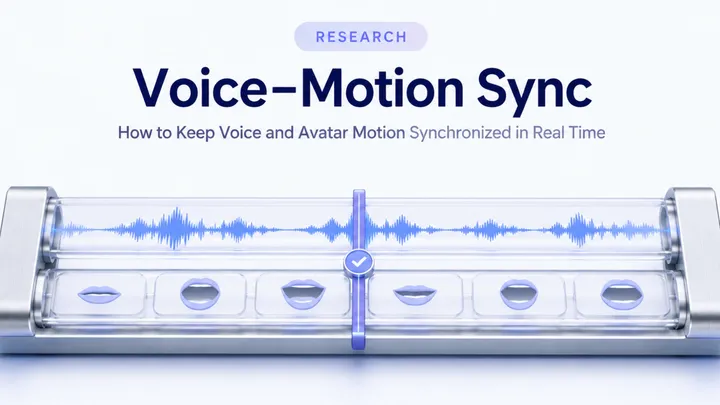
Keep real-time AI avatar voice and motion synchronized with one media clock, ordered chunks, drift measurement, buffer controls, resync, and recovery rules.
Reduce time to first motion by measuring startup milestones, preloading safe assets, warming the renderer, controlling audio chunks, and avoiding false starts.