

Key Takeaways
- From Passive to Interactive: Corporate training is shifting from static MP4 videos and slide decks to real-time, conversational AI avatars that deliver interactive 1-on-1 coaching.
- Substantial ROI: Organizations adopting AI avatars report 70–90% reductions in production costs and compress content update cycles from months down to hours.
- Measurable Learning Outcomes: Interactive avatar roleplay achieves 75% higher knowledge retention and cuts training dropout rates by up to 68%.
- Edge Rendering Architecture: Modern digital human infrastructure renders 3D avatars directly on employee edge devices, lowering operating overhead to $0.42 per hour ($0.007/min) compared to expensive cloud video streaming.
The Enterprise Learning Paradox: Why Passive Video Courses Are Failing Modern L&D
Enterprise learning and development (L&D) is facing an operational crisis. Organizations invest heavily in employee upskilling, leadership development, and compliance onboarding, yet completion rates for traditional e-learning courses remain stubbornly low.
The core issue stems from passive content consumption. For over two decades, corporate training has relied on linear video modules, slide decks, and multiple-choice quizzes. Employees click through pre-recorded videos while multitasking, absorbing only a fraction of the material. According to the Josh Bersin report on corporate learning transformation, traditional training methods fail to build real-world behavioral confidence because watching a video is fundamentally different from practicing a skill.
Furthermore, producing high-quality corporate training videos has historically required video production crews, studio rentals, hired actors, and weeks of post-production editing. When company policies, product features, or regulatory compliance rules change, updating those video assets requires reshooting from scratch.
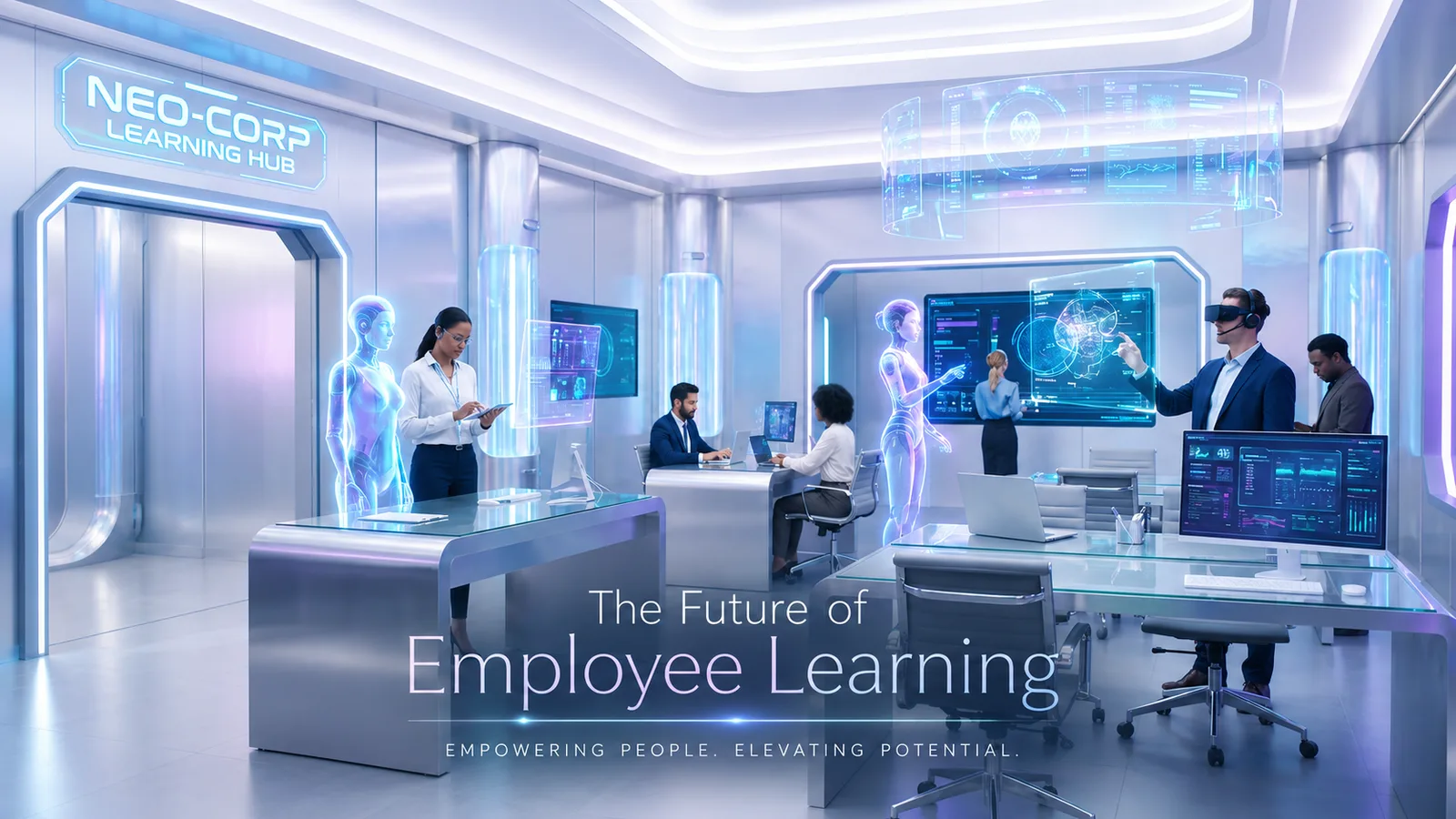
To solve this operational bottleneck, forward-thinking enterprises are adopting real-time AI avatar infrastructure to replace static video production with interactive digital trainers. Rather than watching a pre-recorded speaker, employees now converse directly with lifelike AI avatars that react, evaluate responses, and provide personalized real-time feedback.
From Passive Watching to Interactive Practicing: How Real-Time AI Avatars Work
The evolution of AI avatars for corporate training represents a structural shift in educational technology. First-generation avatar tools functioned strictly as video generators, converting text scripts into static MP4 video files. While this reduced studio costs, it maintained the same passive viewing format.
Next-generation AI avatars operate as live conversational learning engines. By integrating large language models (LLMs), speech recognition, and real-time motion synthesis, an AI avatar functions as an always-on digital instructor that converses naturally with employees.
Real-Time Audio-to-Avatar Lip Sync & Sub-Second Latency
For an AI avatar to feel compelling during a high-stakes sales roleplay or compliance assessment, visual and audio feedback must be instantaneous. High latency destroys conversational realism. Modern platforms utilize direct audio-to-avatar engines that accept audio streams and generate real-time, frame-accurate 3D facial animations with sub-500ms latency.
By delivering ultra-low latency avatar response times, employees experience natural back-and-forth dialogue without awkward pauses or robotic desynchronization.
Conversational Intelligence via RAG and Enterprise Knowledge Bases
AI avatars do not operate in a vacuum. By connecting the avatar’s underlying language model to enterprise knowledge bases through Retrieval-Augmented Generation (RAG), the avatar accesses company documentation, internal SOPs, product specs, and legal guidelines in real time.
When an employee asks a complex technical question or pushes back during a customer service simulation, the avatar provides answers grounded entirely in verified corporate documentation, as detailed in the Spatius developer documentation.
The Business Value: 4 Quantifiable Benefits of AI Avatars in Workforce Development
Integrating AI avatars into corporate learning programs delivers measurable financial and educational returns across four primary dimensions.
+-----------------------------------------------------------------------------------+
|                        REAL-TIME AI AVATAR BUSINESS IMPACT                       |
+------------------------------------+----------------------------------------------+
| 70-90% Video Cost Reduction        | Cuts studio fees, hiring actors, & editing   |
| 75% Higher Knowledge Retention     | Conversational roleplay vs. passive viewing   |
| 48-Hour Compliance Turnaround      | Updates legal content instantly without shoots|
| Unlimited Multilingual Scale       | Deploys 50+ languages from a single script    |
+------------------------------------+----------------------------------------------+
1. 70–90% Reduction in Production Costs & Instant Timelines
Traditional video creation costs between $2,000 and $10,000 per finished hour when accounting for studio time, scriptwriters, camera operators, and editing. AI avatars eliminate physical filming entirely. Organizations deploying avatar platforms report saving 70% to 90% on video production budgets, reducing asset costs from thousands of dollars down to tens or hundreds per module.
More importantly, production timelines shrink from weeks to hours. L&D teams can draft a script, select or generate an avatar persona, and deploy a complete learning module in a single afternoon using cost-effective AI avatar APIs.
2. 75% Higher Knowledge Retention Through Conversational Roleplay
Cognitive science consistently demonstrates that active recall and scenario practice build stronger neural pathways than passive watching. According to research cited in the PwC benchmark on VR and AI interactive training (vrailearning.com/en/blog/ai-avatar-corporate-training-roi), interactive simulation training accelerates time-to-competence up to 4x faster than classroom instruction.
When employees practice handling tough customer objections or technical troubleshooting with an interactive AI avatar, retention rates increase by up to 75%, while course dropout rates decline by 68%.
3. Agile Compliance Updates: Compressing 90 Days to 48 Hours
In regulated industries such as finance, healthcare, and manufacturing, regulatory policy updates require rapid workforce retraining. Traditional video pipelines often take 90 to 180 days to update and re-distribute training modules, exposing the enterprise to compliance audits and operational risk.
With AI avatars, L&D managers simply update the underlying text script or RAG knowledge base. The avatar immediately delivers the updated compliance instructions across global locations in under 48 hours.
4. Global Multilingual Scale Without Trainer Burnout
Global enterprises face significant localization costs when translating training content for international teams. AI avatars break down language barriers by generating fluent speech and lip-synced facial movements across 50+ languages from a single script.
A single master training framework developed in English can be instantly delivered by localized avatars in Spanish, Mandarin, German, or Japanese, ensuring consistent messaging across all global operating divisions.
Pre-Rendered Cloud Video vs. Real-Time Edge Avatars: A Technical Evaluation
When evaluating AI avatar platforms, enterprise IT and L&D leaders must distinguish between two fundamentally different technical architectures: Pre-Rendered Cloud Video Generation and Real-Time Edge Rendering.
| Evaluation Dimension | Legacy Pre-Rendered Cloud Video | Real-Time Edge Rendering (Spatius Engine) |
|---|---|---|
| Delivery Format | Static MP4 video file | Interactive live 3D stream & local render |
| User Interactivity | None (Passive watching) | Full 1-on-1 voice conversation & roleplay |
| Latency | Minutes to hours (rendering queue) | Sub-500ms real-time audio response |
| Bandwidth Requirements | 5–15 Mbps heavy video stream | 100 kbps lightweight data stream |
| Operating Cost | $1.00 – $3.00+ per generated minute | $0.42 per hour ($0.007/min) |
| Device Compatibility | Video player required | Any browser, phone, tablet, kiosk, or LMS |
Traditional cloud-rendering services generate high-definition video files on remote GPUs and stream the resulting video back to the user. This approach requires massive cloud computing resources and high network bandwidth, resulting in high costs ($60–$180+ per hour of video stream) that make continuous interactive training economically unfeasible.
In contrast, modern architectures send ultra-lightweight motion data signals (approx. 100 kbps) over the network and execute on-device edge rendering on entry-level hardware. By running 1080p 25fps avatar rendering directly on the user’s laptop, phone, or kiosk chipset, infrastructure overhead drops dramatically to transparent pay-as-you-go pricing starting at $0.42 per hour.
High-Impact Enterprise Use Cases for AI Avatar Learning
AI avatars excel in training scenarios that require repetitive behavioral practice, emotional safety, and rapid feedback.
Sales & Negotiation Roleplay
Sales onboarding requires reps to practice handling prospect objections, competitor comparisons, and pricing negotiations. Conducting live roleplay with human managers is time-consuming and difficult to scale across large sales organizations.
AI avatars serve as persistent, objective buyers. Sales reps can practice cold calls or enterprise discovery conversations dozens of times, receiving instant scoring on pitch clarity, sentiment, and objection handling before speaking with real clients.
Executive Leadership & Difficult Conversations
Developing soft skills in new managers—such as delivering performance reviews, handling workplace conflict, or communicating organizational changes—requires a safe environment to fail.
AI avatars simulate diverse employee personalities, allowing managers to practice challenging interpersonal scenarios without fear of social judgment or organizational friction.
Customer Service & Frontline Operations
Frontline staff in retail, banking, and hospitality frequently deal with upset customers or complex service requests. AI avatar simulations allow customer service agents to practice de-escalation techniques and policy execution until responses become second nature.
Global Employee Onboarding
Rather than bombarding new hires with dozens of static PDF documents during their first week, enterprises deploy AI onboarding companions. New employees interact with an avatar that guides them through company culture, benefits enrollment, and team structures, answering questions on demand 24/7.
Addressing the Human Element: Will AI Avatars Replace Corporate Trainers?
A common objection among HR executives is whether AI avatars will make human corporate trainers obsolete.
The short answer is no. AI avatars do not replace human educators; they eliminate administrative drudgery and repetitive basic instruction.
In traditional L&D workflows, human trainers spend up to 70% of their time delivering repetitive introductory lectures, grading basic assessments, and coordinating scheduling logistics. By delegating foundational knowledge transfer, compliance drills, and initial roleplay practice to AI avatars, human trainers regain the bandwidth needed for high-impact activities:
- Strategic Talent Coaching: Mentoring high-potential employees and crafting executive career development pathways.
- Complex Organizational Facilitation: Leading live group workshops, cross-functional strategy sessions, and team alignment exercises.
- Curriculum Design & Analytics Review: Analyzing avatar session performance data to identify systemic skill gaps across departments.
As highlighted in the 2026 AI in Learning & Development report, organizations that combine AI avatar-led self-practice with human mentorship achieve higher employee satisfaction and faster skill mastery than those relying on either method alone.
Next Steps: Implementing AI Avatar Infrastructure in Your Enterprise L&D Stack
Transitioning to interactive avatar learning requires a pragmatic deployment strategy. Enterprises successfully adopting AI digital humans follow a four-step framework:
+-----------------------------------------------------------------------------------+
|                        ENTERPRISE ADOPTION ROADMAP                                |
+------------------+------------------+-----------------------+---------------------+
| Phase 1: Pilot   | Phase 2: Stack   | Phase 3: Custom       | Phase 4: Scale      |
| High-volume use  | Integrate avatar | Train custom 3DGS     | Deploy across full  |
| case (onboarding)| SDK with LMS     | executive avatars     | enterprise stack    |
+------------------+------------------+-----------------------+---------------------+- Select a Focused Pilot Use Case: Begin with a high-frequency training bottleneck, such as new hire onboarding, basic sales objection roleplay, or annual security compliance.
- Integrate Avatar SDKs with Existing LMS: Choose an avatar infrastructure that supports standard web and mobile SDKs (Web, iOS, Android, Flutter) and integrates easily with enterprise LMS platforms via standard APIs.
- Deploy Custom Brand Avatars: Create proprietary 3DGS digital human avatars modeled after key company executives, top trainers, or brand mascots to maintain cultural cohesion.
- Analyze Performance & Scale: Track engagement time, roleplay completion scores, and user feedback to refine avatar conversational flows before expanding to additional departments.
If you are ready to evaluate how real-time, low-latency AI avatars can transform your workforce learning outcomes, schedule an enterprise avatar demo with the Spatius technical team today.
Frequently asked questions
What hardware is required to run real-time AI avatars for employees?+
With edge-rendering technology, employees do not need expensive dedicated GPUs. Real-time 3D avatars run smoothly at 1080p 25fps directly inside web browsers, mobile apps, or desktop applications on entry-level laptops, tablets, and smartphones.
How do AI avatars integrate with existing Learning Management Systems (LMS)?+
Modern AI avatar platforms provide flexible SDKs and API endpoints that integrate seamlessly with LMS platforms (such as Cornerstone, Workday, or Moodle), SCORM packages, and enterprise communication tools like Microsoft Teams or custom web portals.
Can we create custom AI avatars of our own internal executives or instructors?+
Yes. Using advanced 3D Gaussian Splatting (3DGS) and facial matching technology, enterprises can generate custom 3D digital twins from short video captures or single portrait photos, allowing executives or lead instructors to deliver personalized training at scale.
How do AI avatars handle sensitive enterprise data and privacy?+
Leading enterprise avatar providers adhere to strict data privacy standards (including SOC 2 and GDPR compliance). By utilizing edge rendering, sensitive conversation audio and telemetry can be processed securely without storing proprietary enterprise knowledge on third-party video servers.
Further reading
 Performance
Comparing AI Avatar Platforms for Speed: Latency, Bandwidth, and Real-World Performance in 2026
How cloud-streaming and on-device architectures compare across end-to-end latency, bandwidth consumption, and real-world performance for corporate training use cases.
Read next Pricing
The Most Affordable Real-Time AI Avatar API in 2026: Pricing, Per-Minute Cost, and What You Actually Pay For
A transparent breakdown of real-time AI avatar API pricing models, per-minute costs, and how edge rendering achieves $0.42/hour for enterprise-scale deployments.
Read next Architecture
AI Avatar on Entry-Level Chipsets: How On-Device Rendering Works on Budget Hardware
How modern AI avatar SDKs render 1080p 25fps 3D avatars locally on entry-level laptops, tablets, and smartphones — with no dedicated GPU required.
Read nextReady to transform your corporate training with interactive AI avatars? Explore the Spatius edge rendering platform and see how organizations achieve 75% higher retention at $0.42/hour. Get started free, or ,或View pricing, or ,或Talk to sales.。