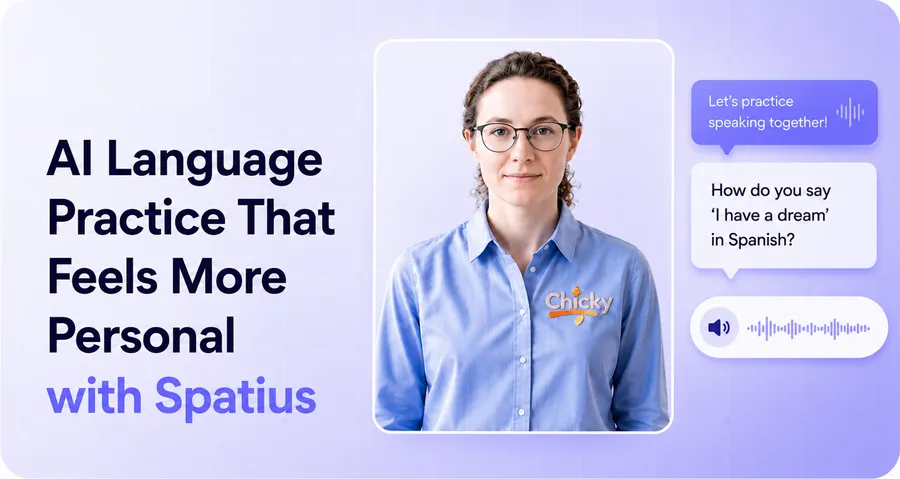
How Midoo AI Scaled to 15K+ Daily Avatar Sessions with Spatius
Midoo AI uses Spatius as the real-time avatar layer for its AI language learning experience, processing 15K+ daily avatar sessions with 173% month-over-month avatar usage growth.
How to Build an AI Avatar Language Tutor: Real-Time 1-on-1 Conversation Practice on Any Device (2026)
A practical guide to building an AI avatar for a language learning app — why a face matters for speaking practice, how on-device rendering keeps it running on student hardware and weak networks, and how the three-layer architecture fits your AI tutor.
Best On-Device AI Avatar Platforms in 2026 (Ranked & Compared)
A ranked comparison of the best on-device and real-time AI avatar platforms in 2026 — evaluated on rendering architecture, bandwidth, latency, device coverage, and cost per minute, with a framework for matching a platform to your use case.
The Cheapest Real-Time AI Avatar API in 2026: Pricing, Per-Minute Cost, and What You Actually Pay For
What real-time AI avatar APIs actually cost per minute in 2026, why cloud video streaming makes them expensive, and how on-device rendering brings the rate down to about $0.007/min — with a full pricing breakdown and a $5,000-budget comparison.
Live Avatar SDK: How to Add a Real-Time Live Avatar to Your App Without Cloud Video Streaming (2026)
A developer's guide to live avatars in 2026 — what a live avatar SDK actually does, how on-device rendering keeps bandwidth at 10–20 KB/s, and how to add a real-time live avatar face to your app on Web, iOS, and Android.
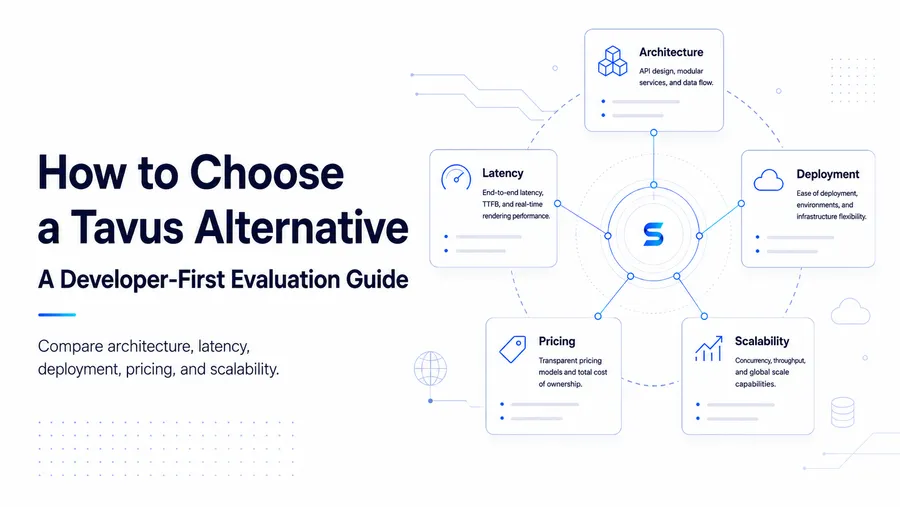
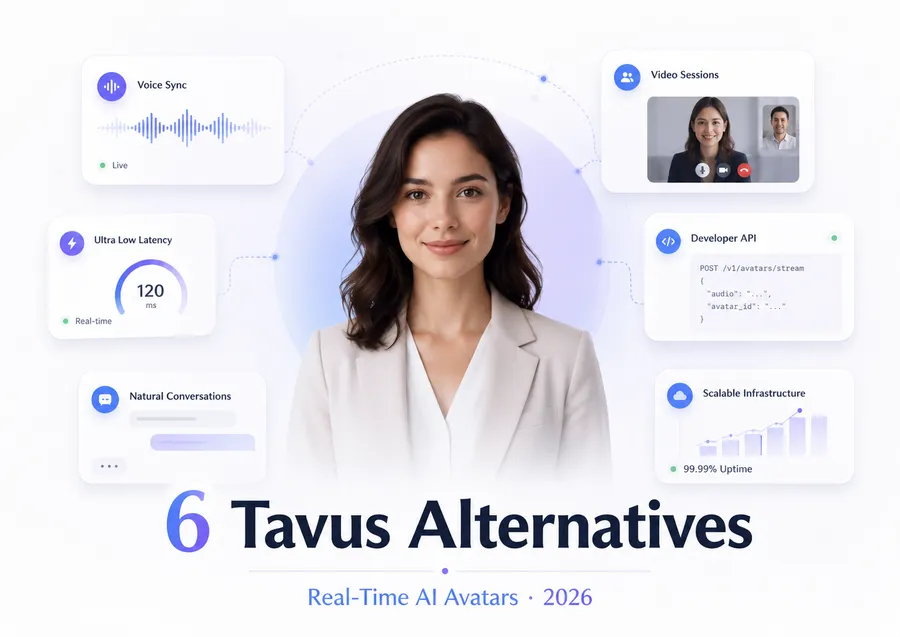
Tavus Alternatives in 2026: 6 Real-Time AI Avatar Platforms Worth Comparing
Evaluating alternatives to Tavus for conversational, real-time AI avatars in 2026? This guide compares six platforms across rendering architecture, bandwidth, latency, device coverage, and cost per minute — with a framework for matching one to your use case.
AI Avatar Platforms with Analytics: What Enterprise Buyers Should Evaluate in 2026
Enterprise evaluation checklist for live AI avatar analytics: latency, device performance, data ownership, monitoring, and integration with your analytics stack.
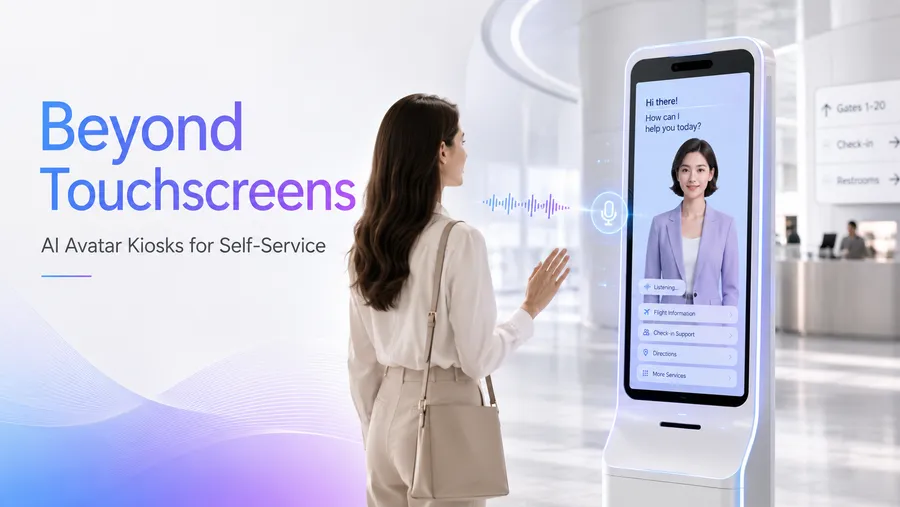
AI Avatar for Virtual Assistants: Build an On-Device Agent That Works on Any Budget Hardware
A practical guide to AI avatar virtual assistants for kiosks, tablets, retail, healthcare, HR tech, and other hardware-constrained deployments.
Conversational AI Avatar for Customer Service: The Complete Platform Guide (2026)
Learn how to evaluate conversational AI avatars for customer service: architecture, latency, device coverage, fallback behavior, and production cost at scale.
Build a Custom AI Avatar from a Single Photo: How 3DGS and Facial Matching Work in 2026
A developer-friendly explanation of single-photo custom avatar generation, 3D Gaussian Splatting, facial matching, Motion data driving, and on-device rendering.
Integrating AI Avatars with LiveKit: A Developer Guide to the Spatius LiveKit Plugin
How to add a real-time Spatius avatar face to a LiveKit Agents voice pipeline, including setup, architecture, latency notes, and common production issues.
AI Avatars for Edge Deployments: Running Real-Time Avatars on Kiosks, Retail Devices, and Low-Bandwidth Environments
Cloud-streaming AI avatars require 1–2 MB/s of sustained bandwidth per session. That's the wrong architecture for kiosks, retail, and field deployments. This guide covers what changes when you move to on-device rendering — and why 10–20 KB/s changes everything.
AI Avatar on Entry-Level Chipsets: How On-Device Rendering Works on Budget Hardware
Most AI avatar SDKs stream heavy video from the cloud. Spatius streams only lightweight Motion data — as little as 10–20 KB/s — and renders the avatar locally. That's why it runs stably on entry-level chipsets with no dedicated GPU.
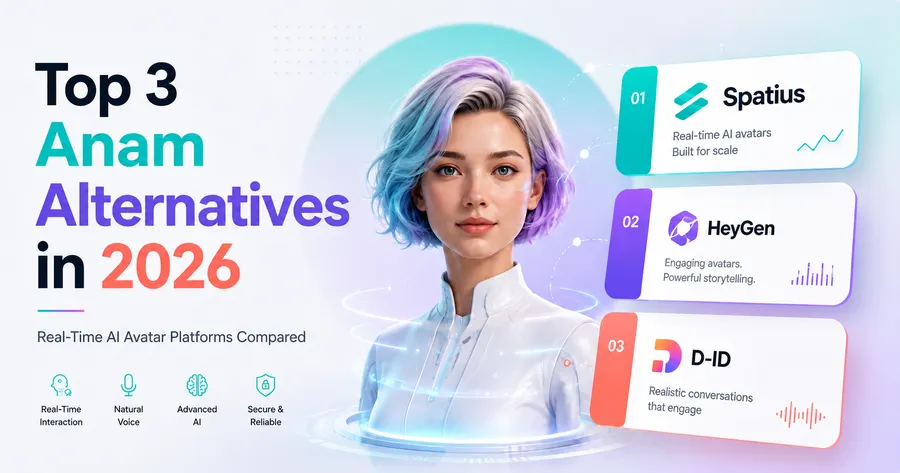
Anam.ai Alternatives in 2026: On-Device AI Avatar Platforms Worth Considering
Evaluating alternatives to Anam.ai for real-time interactive AI avatars? This guide covers how Anam's cloud-streaming architecture compares to on-device platforms — with specific numbers on bandwidth (1–2 MB/s vs 10–20 KB/s), latency, cost, and device coverage.
Comparing AI Avatar Platforms for Speed: Latency, Bandwidth, and Real-World Performance in 2026
Speed in real-time AI avatars isn't one number. This breakdown compares cloud-streaming and on-device architectures across end-to-end latency (<1.5s vs >3s), bandwidth (10–20 KB/s vs 1–2 MB/s), and what each means when conditions are less than ideal.
On-Device AI Avatar vs Cloud Streaming: Architecture, Bandwidth, and Cost in 2026
Cloud-streaming and on-device rendering solve the same problem — a real-time AI avatar — through opposite architectures. This breakdown covers bandwidth, latency, cost, and device compatibility with the actual numbers.
AI Hologram: How to Build a Holographic AI Avatar in 2026
What an AI hologram means for builders in 2026, and how on-device avatar rendering turns the idea into a practical web, mobile, kiosk, or AR experience.
HeyGen Interactive Avatar vs. Alternatives: A Use-Case-by-Use-Case Breakdown
A scenario-by-scenario guide to when HeyGen LiveAvatar makes sense, when Spatius is a stronger fit, and how to choose an interactive avatar platform.
Interactive Avatar: The Complete Guide to Real-Time AI Avatars in 2026
A complete guide to interactive avatars: how they work, what to evaluate, and why rendering architecture determines latency, bandwidth, and cost at scale.
D-ID Alternatives in 2026: Why Teams Are Switching to On-Device AI Avatars
Compare Spatius and D-ID across rendering architecture, bandwidth, latency, SDK support, and production use cases for real-time AI avatars.
Avatar SDK Demo: How to Test a Real-Time AI Avatar Before You Commit to a Platform
If you're evaluating interactive avatar platforms, the demo is the product. Here's how to use Spatius's live playground — and what to look for when testing any avatar SDK.
HeyGen Interactive Avatar: What It Does, Where It Falls Short, and What to Use Instead
An honest breakdown of HeyGen LiveAvatar — how it works, what it costs, and when the architecture isn't the right fit. Includes a comparison framework for evaluating real-time avatar platforms.
7 Best Platforms Like Synthesia in 2026 (Ranked & Compared)
A ranked comparison of 7 Synthesia alternatives in 2026 — what each platform does well, and a framework for matching your use case to the right tool.
Spatius vs LiveAvatar (2026): Real-Time AI Avatar Platform Comparison
Spatius delivers on-device edge rendering at ~95% lower cost per minute than LiveAvatar's cloud streaming pipeline, with native Web, iOS, and Android SDKs plus a permanent free tier.
Spatius vs Synthesia (2026): Real-Time AI Avatar Platform Comparison
Spatius delivers real-time AI avatars with on-device rendering at ~99% lower cost per minute than Synthesia's video-generation plans, with Web, iOS, and Android SDKs, 10-20 KB/s bandwidth, and Bring Your Own LLM (BYO LLM) support.
How to Make a Hologram Out of an AI Avatar
A hands-on guide to turning your AI avatar into a real-time hologram effect using an on-device rendering SDK. Built for Web, iOS, and Android developers — includes code samples and latency comparisons, no expensive cloud streaming required.
Spatius vs Tavus (2026): Real-Time AI Avatar Platform Comparison
Spatius and Tavus both power real-time interactive AI avatars — but Spatius's on-device edge rendering delivers ~98% lower cost per minute and works on any network, while Tavus relies on cloud video streaming claiming <500ms end-to-end latency under optimal conditions.
Spatius vs Anam.ai (2026): Real-Time AI Avatar Platform Comparison
Compare Spatius and Anam.ai side by side - pricing, latency, SDK support, and use cases. See why teams are switching to Spatius for 21x lower cost and on-device edge rendering.