

AI Avatar Generators vs. Real-Time Avatar Engines
AI avatar generators create a finished asset. Real-time avatar engines participate in a live interaction. Both can show a human-like presenter, but their workflow, cost model, and product fit are very different.
The confusion is understandable. A vendor may offer a stock avatar, a custom avatar, generated video, and a live API under one brand. But the buyer’s question should be simpler: are you publishing approved content, or are you putting an agent into a conversation where the user can change the next turn? Tavus makes that distinction explicitly in its article on avatar generators versus real-time engines.
AI avatar generators are production tools
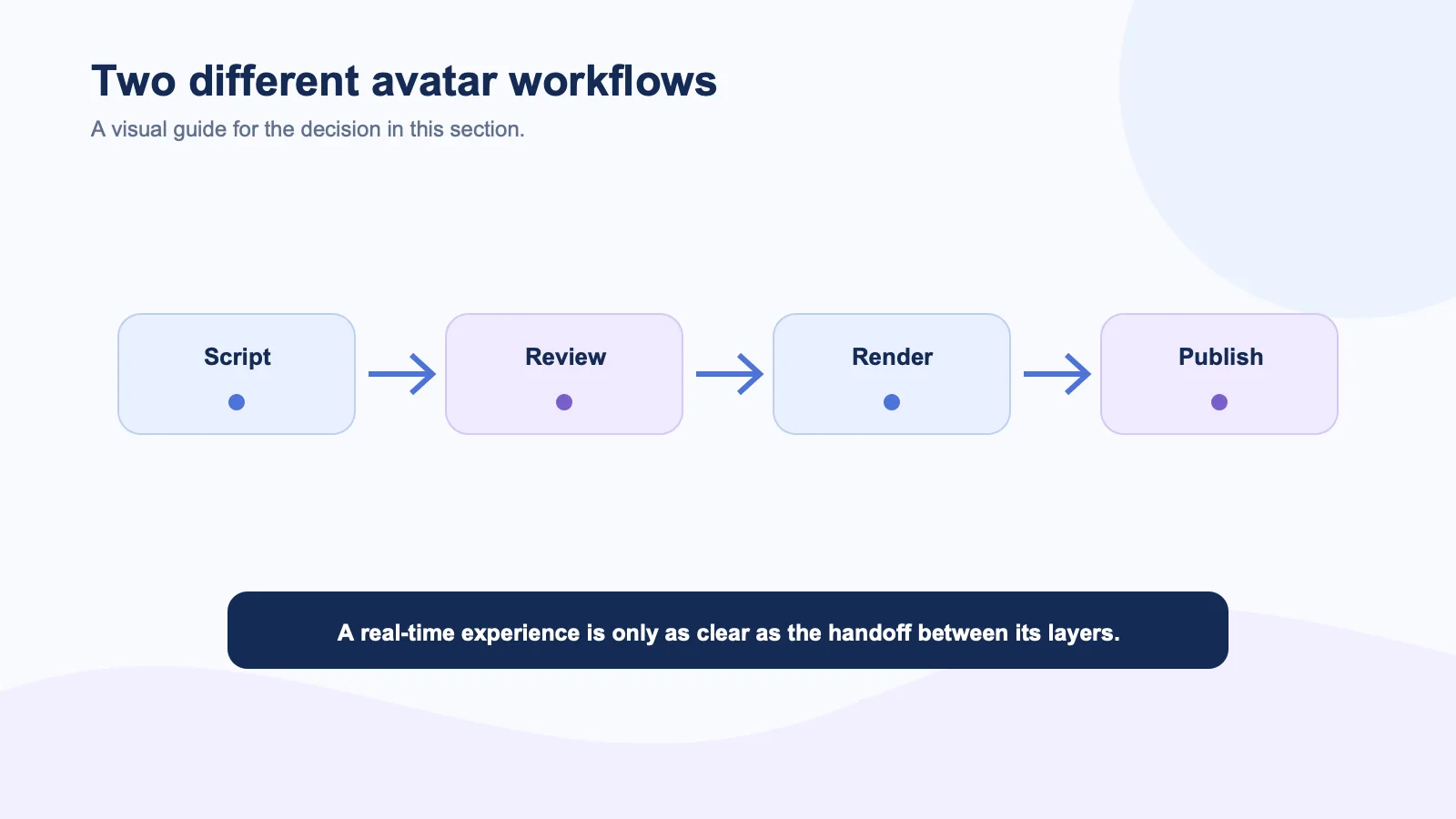
A generator starts with a script, voice track, or scene plan and renders a video that can be reviewed before it goes live. This suits localized product announcements, training modules, sales follow-ups, and repeatable internal communications. Synthesia’s avatar product pages describe this familiar production workflow: pick an avatar, prepare content, generate, then distribute.
The big advantage is control. Legal can approve the words. Brand can approve the visual treatment. The final result can be captioned, translated, added to an LMS, or published wherever video belongs. If a feature changes, you update the scene and render again. There is no live turn-taking decision to manage.
Real-time engines are interaction tools
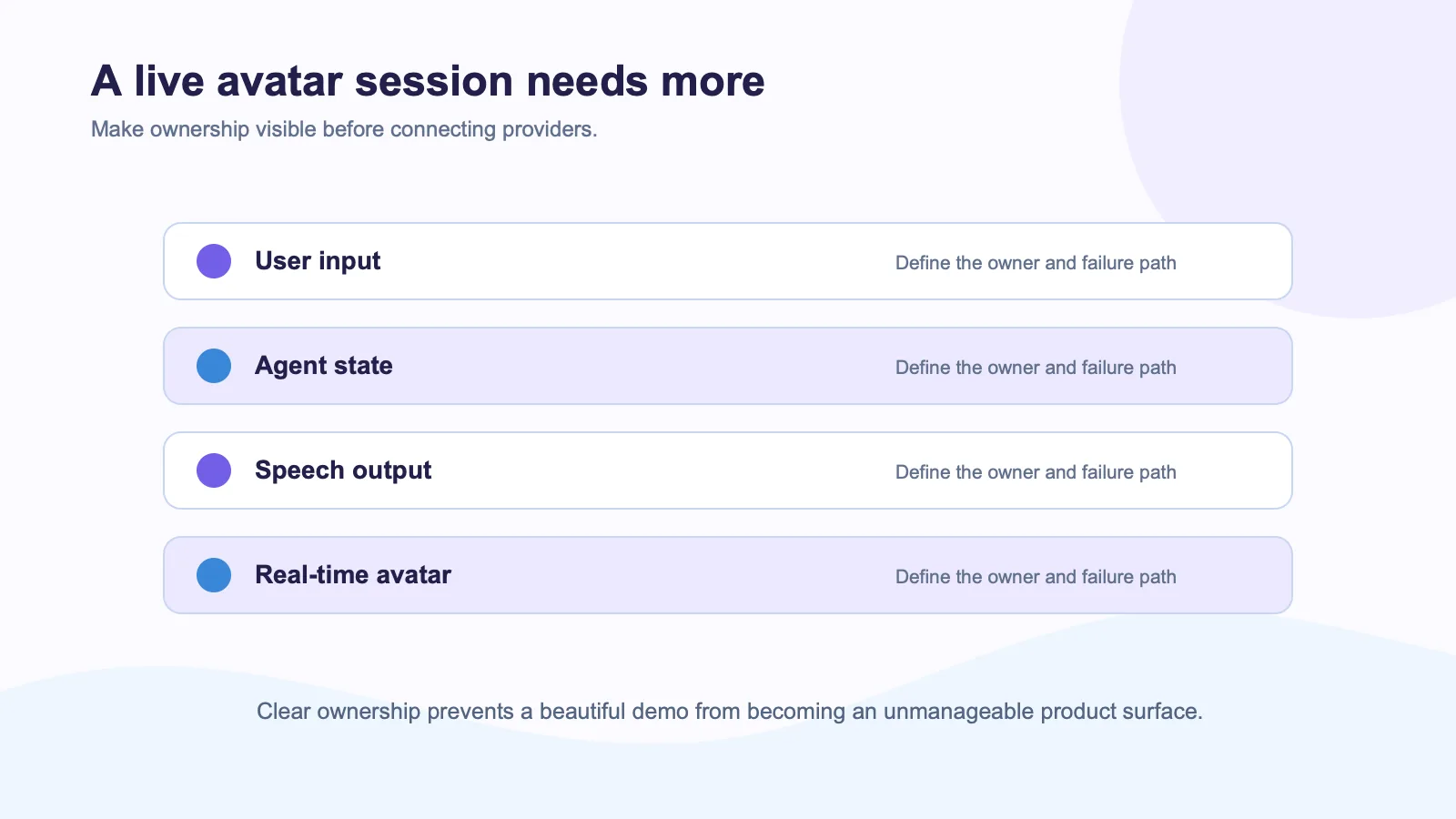
A real-time engine has to respond to a person as the session unfolds. It receives a stream of speech or agent output, drives motion or video, and must keep the relationship between audio and visual behavior believable. Anam describes its custom avatar model as an interactive system rather than a pre-rendered animation in its ONE-SHOT announcement.
That makes a real-time engine useful for product onboarding, guided discovery, practice simulations, or customer conversations where the user’s questions determine the response. It also creates obligations that a generator does not have: consent, session controls, a visible loading state, fallback behavior, and a way to reach a human. See the considerations in Spatius’s guide to human handoffs.
The architecture is different
Generated video is often measured in renders, seats, credits, and media minutes. A live system is measured in session duration, concurrency, network behavior, response time, and the surrounding speech and model costs. A streaming provider may render video in the cloud; a motion-driven approach may deliver lighter data to a client renderer.
Spatius documents the latter boundary: Motion Server and AvatarKit drive real-time motion and client rendering rather than returning a completed video. That does not make it a substitute for a video-generation studio. It makes it relevant to a different engineering problem: adding a visible persona to a product-owned agent stack.
Use the right test
| If your team needs to… | Start with… |
|---|---|
| Publish a training lesson in several languages | An avatar generator |
| Review every word and frame before release | An avatar generator |
| Let a user ask a follow-up question | A real-time avatar engine |
| Keep your existing agent, tools, and knowledge base | A composable real-time layer |
| Run a live role-play or guided workflow | A real-time avatar engine |
Do not force an interactive task through an exported video. It feels brittle the moment the user asks something unexpected. And do not use a live avatar when a clear, captioned 90-second video would do the job better. HeyGen’s own LiveAvatar FAQ positions real-time interaction as distinct from pre-recorded media for this reason.
A sensible hybrid model
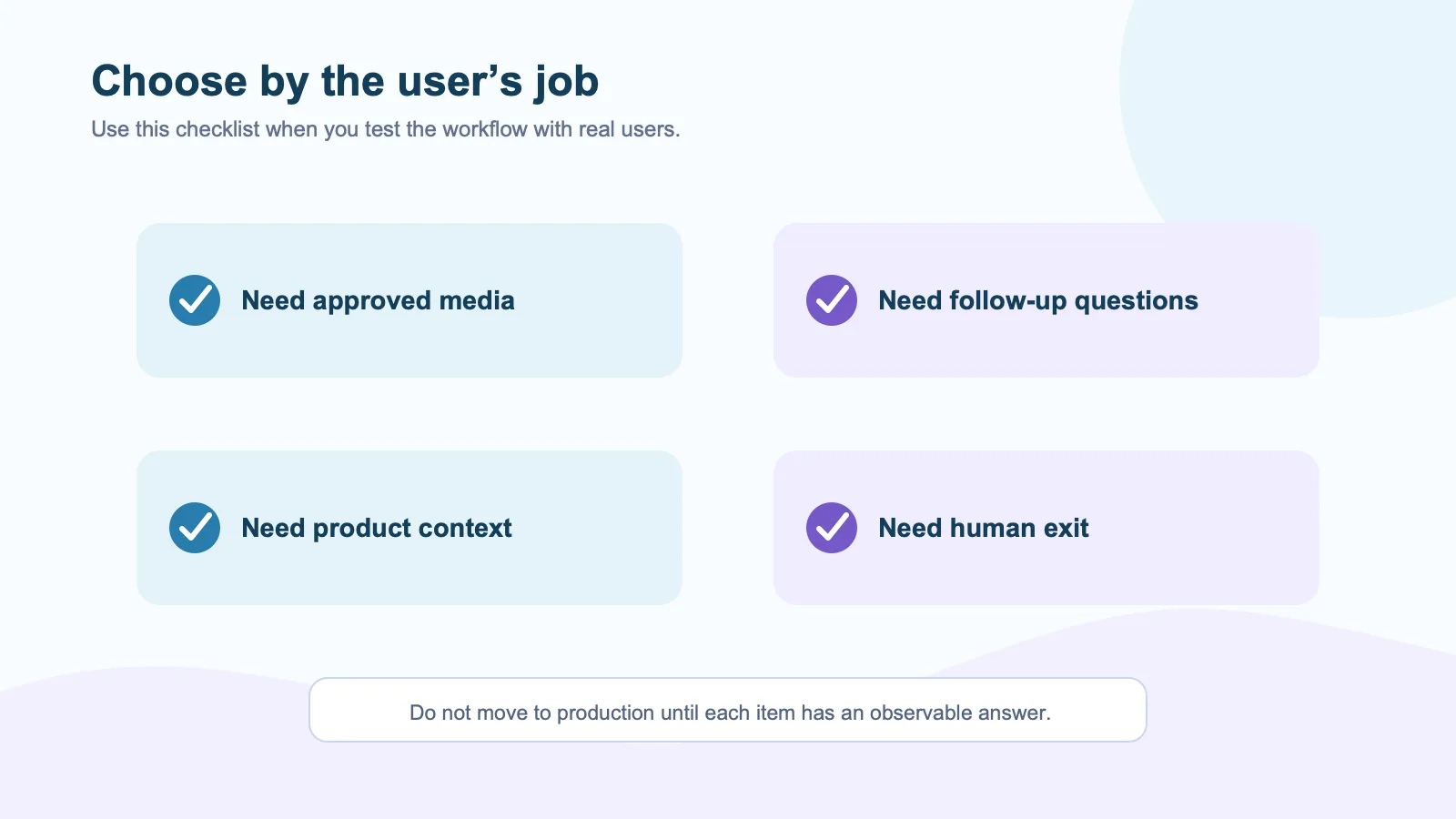
Many B2B products should use both. A release announcement can be generated video. The “help me configure this” moment inside the app can be a live agent with an avatar. The two formats can even share a brand persona, but their success metrics differ: completion and approval for generated content; resolution, activation, and handoff quality for live interaction.
Start with the user’s job. The technology choice gets much less confusing after that.
External sources
- Synthesia avatar overview
- HeyGen introduction to LiveAvatar
- D-ID AI avatar and agent explainer
- Anam on interactive custom avatars
- Tavus introduction to conversational video AI