

Tavus vs Anam: Real-Time Avatar APIs Compared
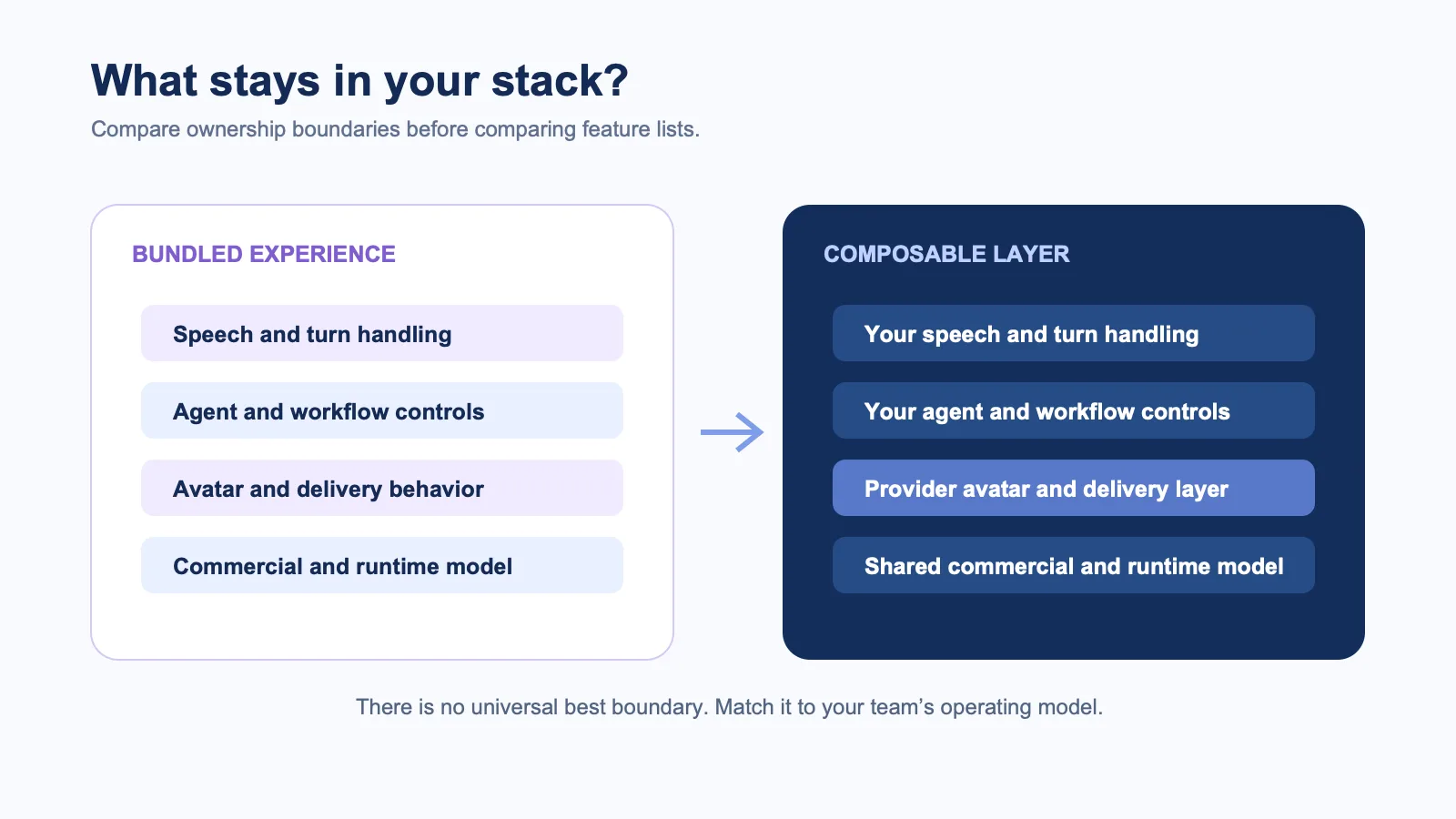
Choose Tavus if you want an end-to-end conversational-video product. Choose Anam if you want a hosted real-time avatar that can be added to an agent stack you already run. The deciding variable is not which avatar looks best in a launch clip. It is how much of the conversation your vendor should own.
Both platforms are for real-time experiences, rather than the familiar “submit a script and download a video” workflow. Yet their product framing points teams toward different buying decisions. Tavus sells a Conversational Video Interface (CVI). Anam sells a real-time conversational avatar layer with APIs, custom avatars, and framework integrations.
At a glance
| Question | Tavus | Anam |
|---|---|---|
| What is the core live product? | Conversational Video Interface | Hosted real-time conversational avatar |
| Does it bundle more of the conversation? | Yes—Tavus describes CVI as an end-to-end pipeline | The developer can keep existing LLM and voice choices |
| How does public pricing read? | Monthly plan plus included conversation minutes and pay-as-you-go | Plans expose included minutes, concurrent sessions, and overages |
| Useful for | Teams that want a larger vendor-owned conversation surface | Teams that want to attach a visual persona to an existing agent |
| First proof-of-concept check | Are the bundled components the ones you want? | Are session limits and concurrency right for your workload? |
Tavus: choose it for a bundled CVI route
Tavus’s CVI documentation describes a real-time, human-like multimodal video conversation with a Replica. Its public pricing page goes further: it says CVI includes the conversation pipeline, listing LLM, audio, speech recognition, WebRTC, and rendering as part of the offer.
That can be an advantage for a greenfield prototype. A team with no voice-agent infrastructure can spend less time selecting and connecting components. The downside is strategic, not cosmetic: if you already have a chosen LLM, speech provider, prompt architecture, tools, policy layer, and analytics system, you need to understand how Tavus fits around them rather than assume it disappears behind one API.
Pricing also needs careful reading. Tavus counts live conversation minutes from connect to disconnect and publishes a minimum charge per conversation. That is not a criticism—it is a reminder that a customer-support deployment, an interview simulator, and a five-minute product demo will create very different bills.
Tavus is usually the better first fit when
- You want a vendor-managed conversational-video experience.
- Your prototype benefits from one integrated path instead of several providers.
- Your acceptance criteria include the whole live conversation, not only visual rendering.
Anam: choose it for a hosted avatar alongside your agent
Anam’s LiveKit integration guide puts its avatar at the end of an agent pipeline. The message is direct: a team can retain the model and voice services it has already selected, then add the avatar as the user-facing visual participant.
That makes Anam attractive to teams that already have agent behavior in production. Perhaps the application has domain-specific retrieval, tool permissions, a proprietary evaluation loop, or a human handoff system. In that case, the question is less “who can run a conversation?” and more “how do we make the conversation visible without rebuilding its brain?”
The public Anam pricing page lists included minutes, custom-avatar allowances, simultaneous sessions, maximum conversation lengths, and plan-specific overage rates. Those are useful planning details. A pricing table cannot tell you whether the live interaction feels right, but it can keep a pilot from accidentally proving a workflow that the production plan cannot support.
Anam is usually the better first fit when
- You already run an LLM, TTS, and agent workflow.
- You want a hosted avatar product instead of a full vendor-owned conversation pipeline.
- You need a clear session and concurrency model for an initial test.
Don’t confuse real-time video with one product architecture
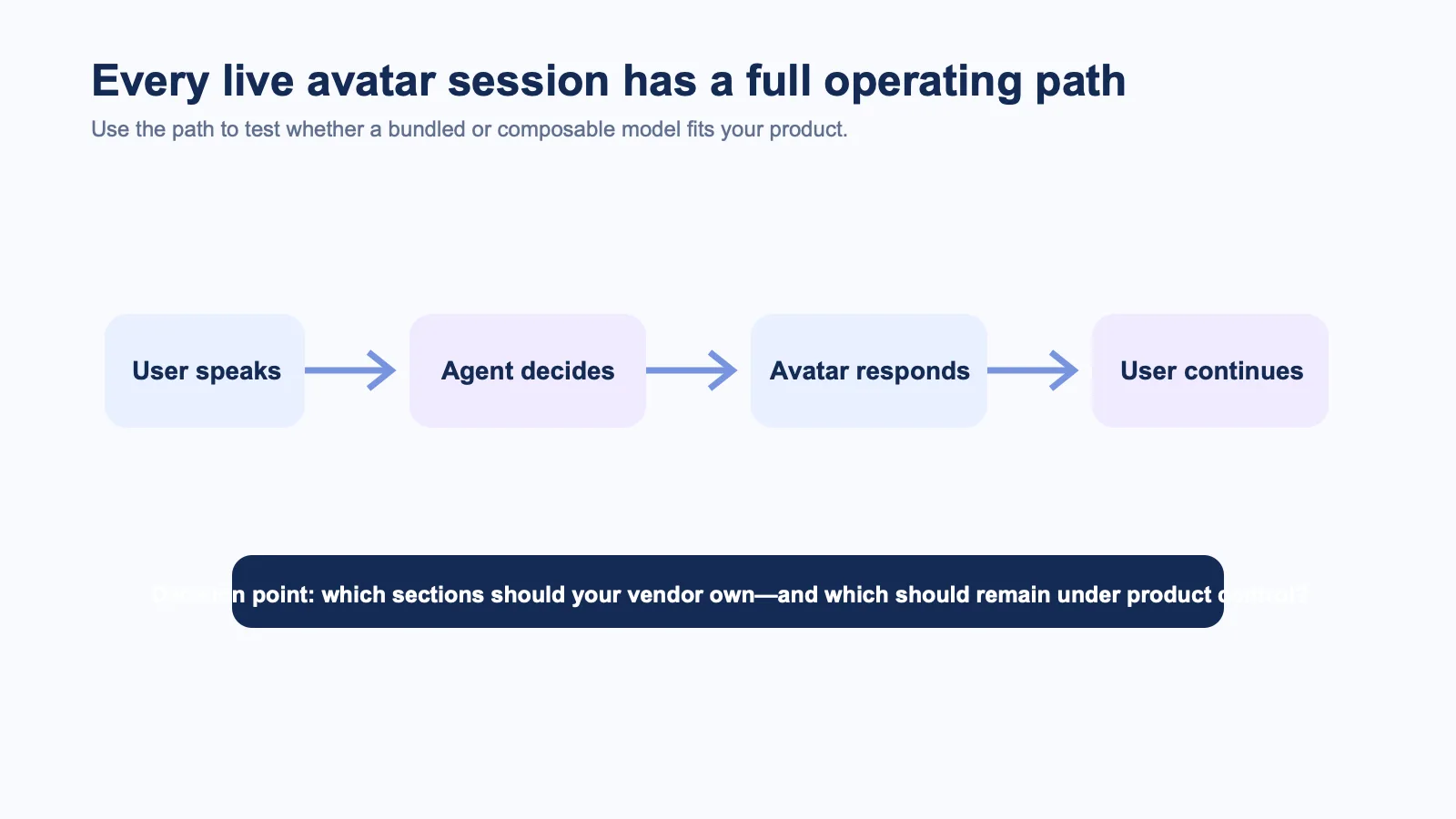
Tavus also maintains an asynchronous Video API; its video quickstart explicitly distinguishes that file-output workflow from CVI. This is a helpful sanity check for every avatar procurement discussion. “Real-time” describes the experience, not the degree of vendor control over the stack.
The same distinction shows up in the wider ecosystem. LiveKit Agents lets developers mix models, STT, TTS, tools, sessions, and avatar providers. Its current avatar provider list includes both Tavus and Anam. The plug-in line item is only the beginning of the architecture.
A practical pilot scorecard
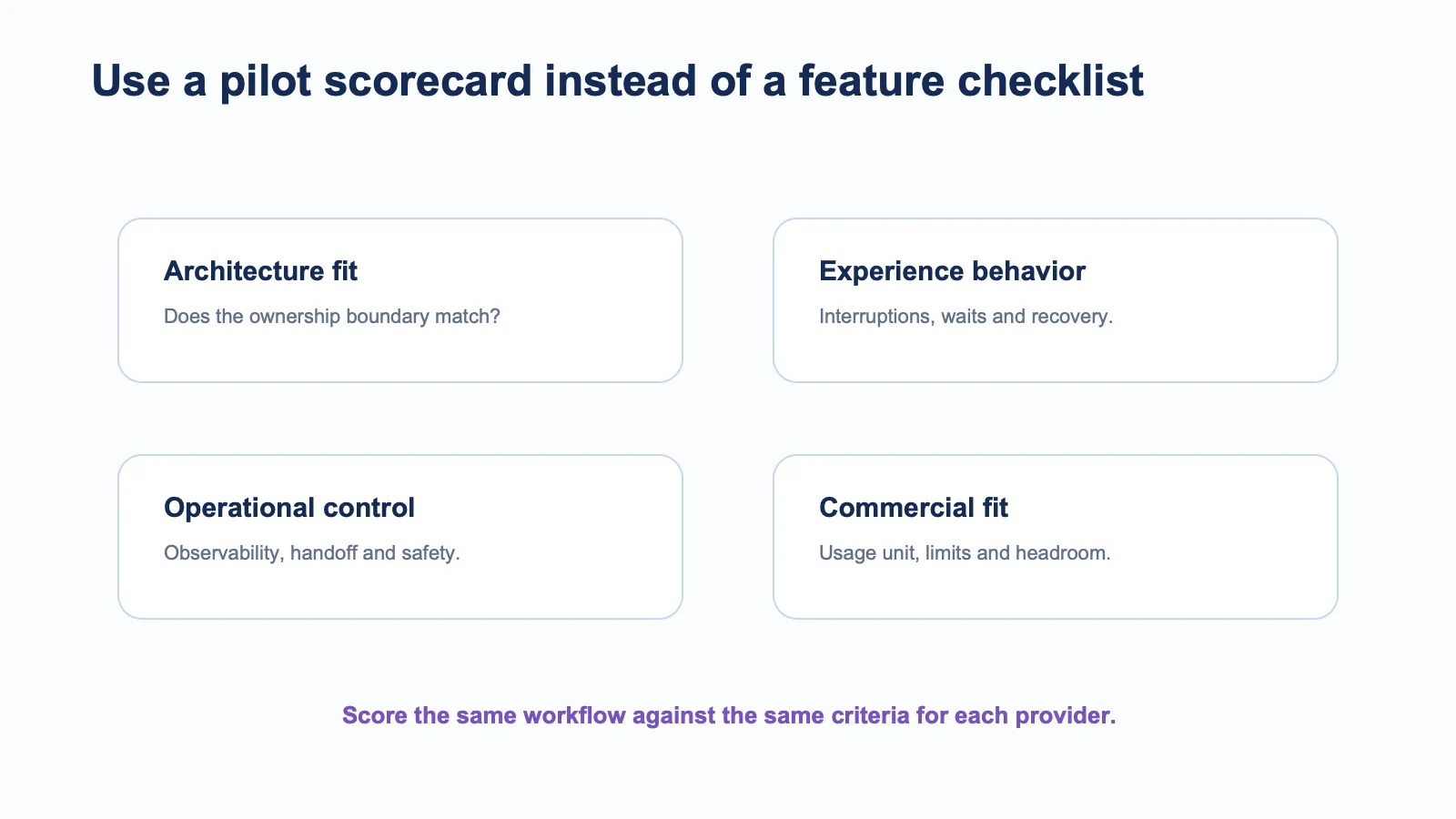
Run both products through the same flow, then score what the user actually experiences:
| Test | Why it matters |
|---|---|
| User interrupts an answer | Reveals whether a turn transition feels controlled |
| Agent calls a slow tool | Shows the waiting state instead of a highlight reel |
| User returns after a network drop | Tests session recovery and user messaging |
| Conversation runs for your real average duration | Validates the plan’s minute and limit assumptions |
| Your existing agent changes a policy or prompt | Shows how much of the stack you still control |
Keep the evaluation honest. A vendor may win the “fastest first demo” test and lose the “fits our existing platform” test. Both findings are useful.
Final recommendation
Use Tavus when your team wants a broader, bundled Conversational Video Interface and accepts that scope as a product decision. Use Anam when your core agent already exists and you want a hosted real-time avatar to join it. If the team needs to keep the full intelligence layer while also separating visual delivery from a cloud video stream, add Spatius’s integration architecture to the comparison.
Suggested CTA: Ask every vendor to run the same interruption, tool-wait, reconnect, and 15-minute concurrency test before you compare pricing.