

D-ID Alternatives for Real-Time AI Agents in 2026
D-ID is a sensible starting point when a team wants a web-facing digital human without building every visual component itself. Its LiveKit plug-in also makes it relevant to teams already building a voice agent. But “a D-ID alternative” is not one category. Some products bundle the whole conversational experience; others provide only the avatar layer; others are better for scripted video than a live product interaction.
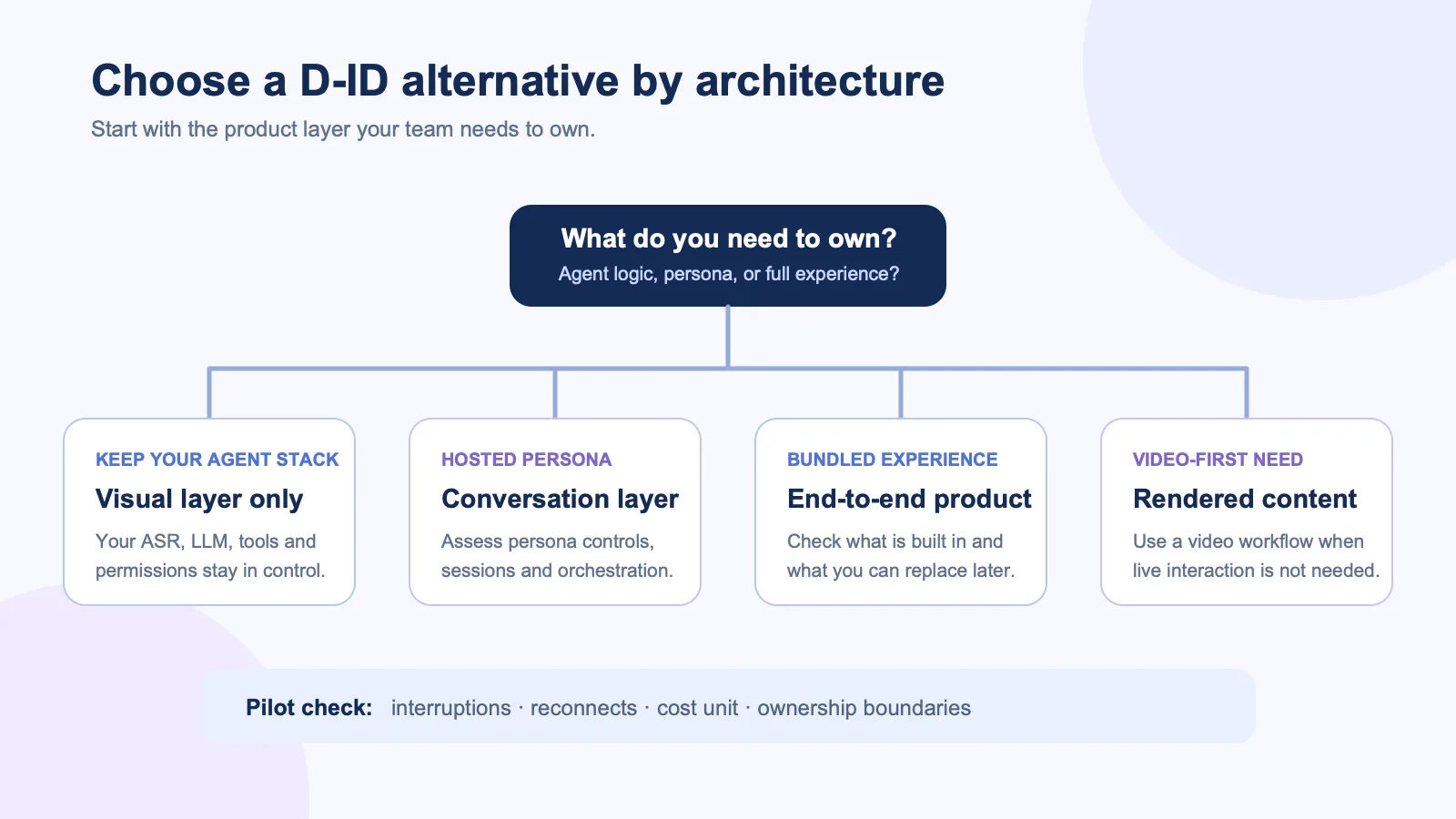
The right replacement depends on one question: does your application need a finished video stream, or does it need a visual layer that fits an agent stack you already own?
Quick comparison
| Platform | Best for | What it gives you | Watch for |
|---|---|---|---|
| Spatius | A product-owned voice or agent stack | Audio-to-motion infrastructure and local avatar rendering | You still own ASR, LLM, TTS, and workflow logic |
| Anam | Hosted conversational avatars | A real-time avatar product with API and LiveKit options | Usage is priced as a hosted avatar session |
| Tavus | A bundled conversational-video experience | An end-to-end CVI product with video, speech, and conversation components | Compare bundled minutes with care |
| HeyGen LiveAvatar | Web integrations with a credit model | Interactive-avatar API and SDK paths | Its API also covers asynchronous video products |
| Protoface | Teams evaluating a lightweight real-time avatar provider | A developer-focused agent-facing avatar product | Confirm the exact integration and commercial terms for your use case |
1. Spatius: best when your application owns the intelligence
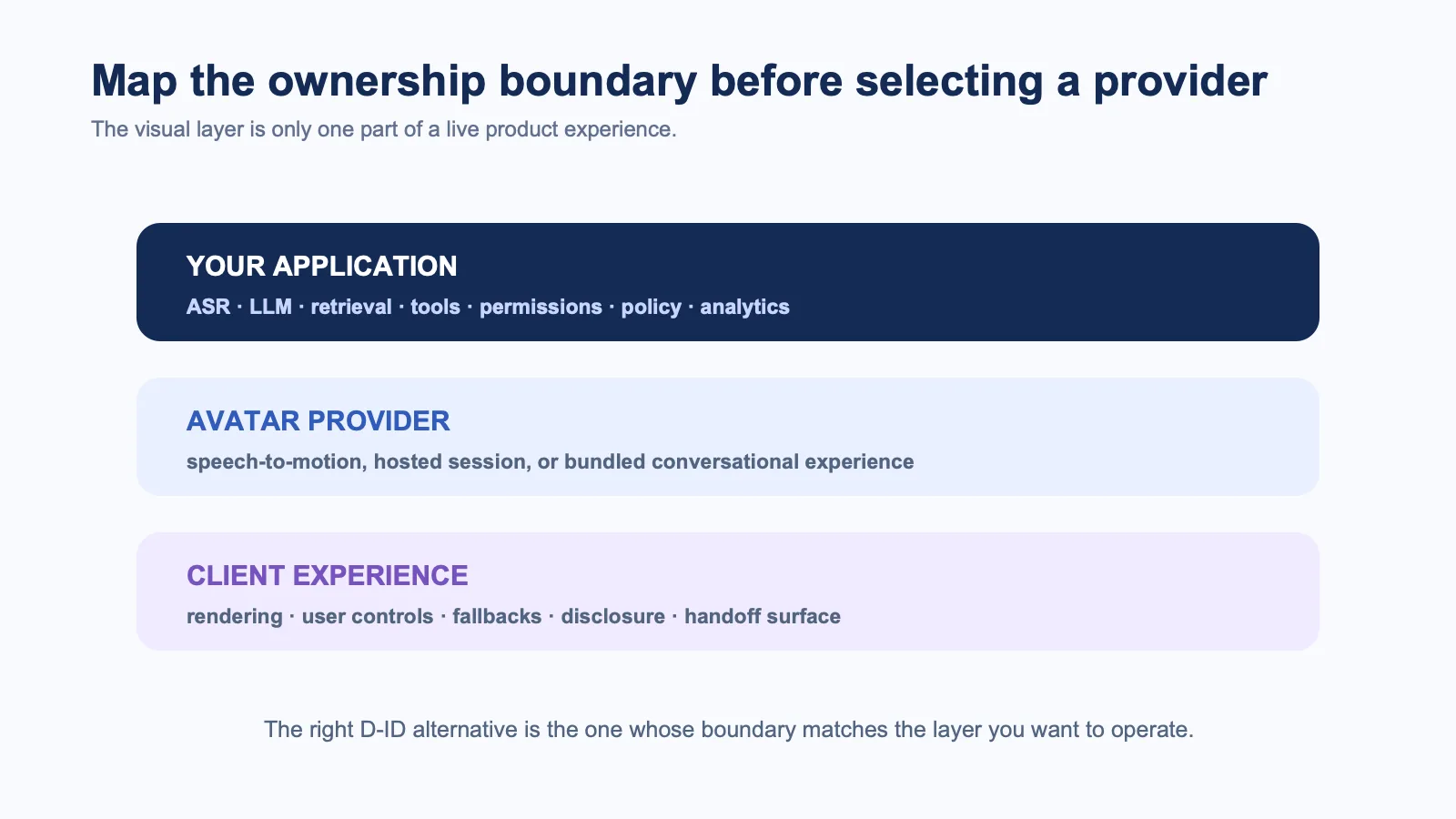
Choose Spatius when your SaaS product already has its own agent, knowledge layer, or speech stack and needs a real-time avatar layer rather than a new all-in-one agent platform. In the documented model, Motion Server receives speech audio and returns motion data, while AvatarKit renders the avatar on the client. It does not return a finished video, and it does not replace ASR, LLM, TTS, tools, or turn-taking in your application. See the Spatius developer docs map.
That distinction matters in a product roadmap. It lets a team keep the LLM provider, retrieval system, permissions, analytics, and agent behavior it already trusts, then add the visual output separately. The official LiveKit Agents integration follows the same boundary: your agent worker remains the agent; the avatar layer attaches to it.
Use it when low-bandwidth delivery or client-side rendering is part of the decision. Spatius describes a cloud-edge design that sends a lightweight motion stream and renders locally, rather than shipping completed avatar video from the cloud. Its homepage lists WebRTC and WebSocket audio inputs and a public Scale rate; verify current pricing before a purchase decision.
2. Anam: best for a hosted real-time persona
Anam is a strong option when the team wants a hosted, real-time conversational avatar and a shorter route to a visible agent. It publishes a LiveKit integration guide and describes its platform as a visual layer that can sit alongside the LLM and voice providers a developer already uses.
Its public pricing page exposes a familiar hosted-session model: included minutes, simultaneous-session limits, custom-avatar allowances, and overage rates. That makes evaluation straightforward for a pilot. It also means that the cost conversation should include session length and concurrency, not just the monthly plan name.
Pick Anam if you want a hosted avatar experience and its current model quality is the primary buying criterion. Pick a rendering-layer approach instead if control over the rest of the stack, client rendering, or delivery architecture is the main constraint.
3. Tavus: best when you want a bundled CVI stack
Tavus calls its live offering a Conversational Video Interface. Its developer documentation describes a real-time video conversation with a Replica, and its pricing page says CVI bundles the conversational pipeline components.
That can be attractive when a team wants one vendor to cover more of the path. It is less clean when the application already has established STT, TTS, LLM, observability, or policy layers. A real comparison should therefore ask what is included in each minute, whether the vendor meters minimum session lengths, and whether the team needs a bundled conversation or only the visual output.
4. HeyGen LiveAvatar: best when the team also uses HeyGen’s video tools
HeyGen positions LiveAvatar as its real-time interactive product. It is a reasonable shortlist candidate for web-based experiences, particularly if the same team already uses HeyGen for generated video or translation.
Don’t compare its credit balance directly with an avatar-rendering price. HeyGen’s own API pricing explanation covers more than one output type, while LiveAvatar has separate streaming rules. Its LiveAvatar help page publishes different efficiency figures for Lite and Full integration methods. The implementation path changes the effective cost.
5. Protoface: best for an early developer comparison
Protoface positions itself as a real-time face for AI agents and publishes a developer-facing product page with integrations across voice-agent ecosystems. It belongs on a technical shortlist if your team is evaluating current API options rather than only mature video studios.
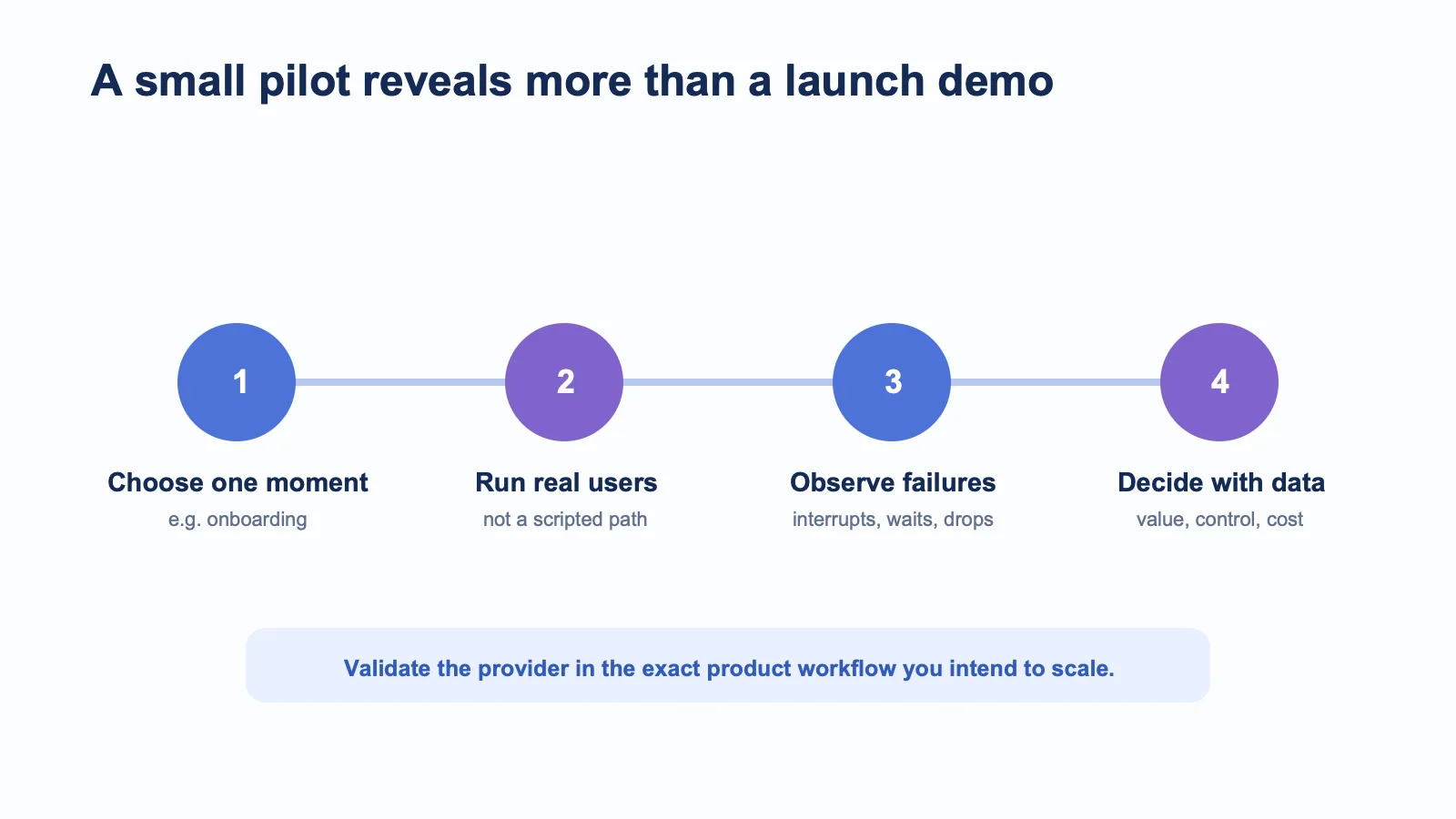
The practical next step is a controlled proof of concept. Test interruption behavior, reconnects, browser CPU, visual quality under your target network, and the exact contract around custom avatars. Those are production questions; a marketing feature list will not answer them.
How to choose a D-ID alternative
Use this quick filter:
- You own the agent stack and want a visual layer: start with Spatius and compare the Direct Mode and Backend Mode paths.
- You want a hosted conversational persona: evaluate Anam.
- You want a bundled, video-forward conversation stack: evaluate Tavus.
- You need both generated video workflows and an interactive option: evaluate HeyGen LiveAvatar.
- You are testing newer developer-first options: include Protoface in a time-boxed pilot.
The bottom line
D-ID is not “replaced” by one universally better tool. The useful split is architectural. If your team wants a cloud-hosted visual agent, compare D-ID with Anam, Tavus, and LiveAvatar. If your product already owns the intelligence and needs a composable avatar layer, compare D-ID with Spatius and test the integration boundary before you commit.
Suggested CTA: Book a Spatius technical demo to walk through the integration path for your current agent stack.