

How to Choose a Conversational AI Platform for Enterprise
Choose a conversational AI platform by the control points your enterprise cannot give away: data access, system actions, identity, observability, and the user experience when the system fails. Start there. Avatar quality and demo polish come later.
This is not a simple chatbot purchase anymore. Enterprise teams are now evaluating text agents, voice agents, visual avatars, and platforms that bundle them together. Tavus’s enterprise selection guide reflects this shift, and Anam’s recent content on conversational AI selection, implementation, and ROI does too. The evaluation still comes down to one practical question: can this service fit safely inside the workflow we already operate?
1. Define the user moment
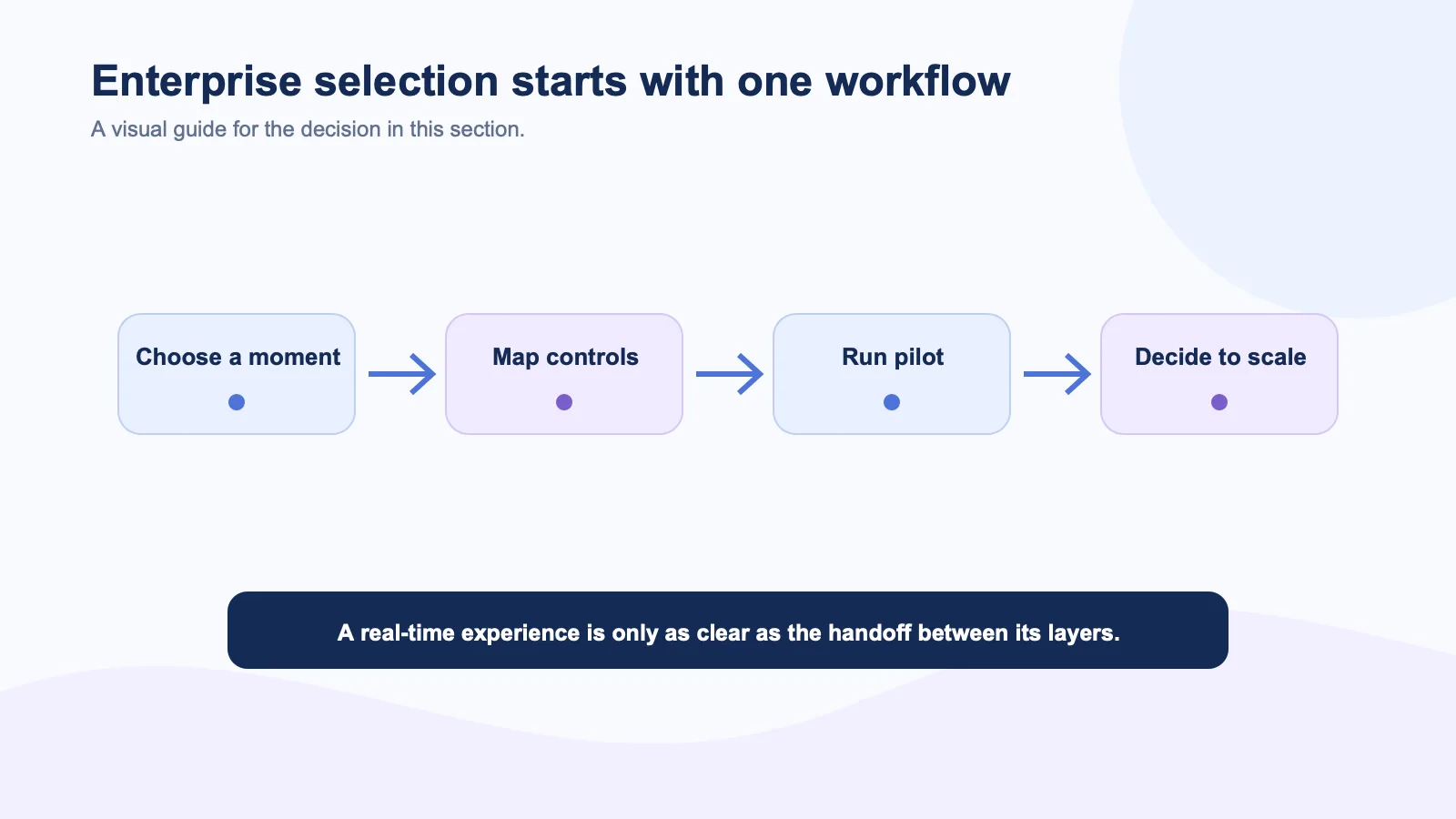
Do not start with “we need an AI agent.” Pick one user moment that has a measurable outcome. For example: help a trial admin activate a feature, help a support customer complete a configuration, or let sales reps practice a qualification call.
The moment determines the interface. A text answer may be enough for a policy lookup. A voice or avatar interaction may help where timing and coaching are part of the work. The scope should stay small enough for a pilot to finish within a few weeks, not turn into a replacement of your entire support operation.
2. Map the ownership boundary
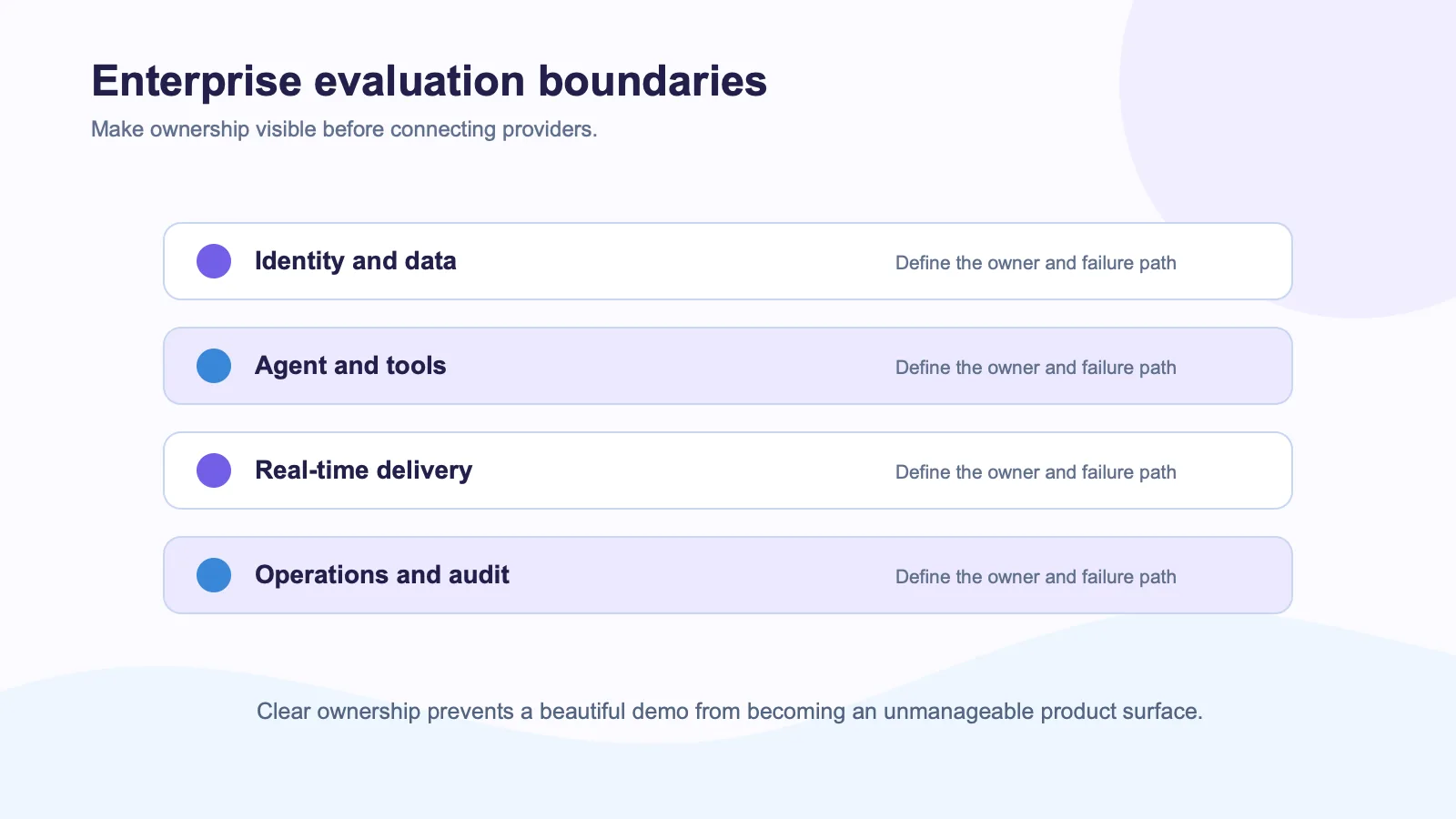
Write down which system owns each layer:
| Capability | Questions for the vendor |
|---|---|
| Identity and permissions | Can your application enforce access before each action? |
| Knowledge and tools | Does the agent call your systems with scoped access? |
| Conversation data | What is retained, where, and for how long? |
| Real-time transport | How are sessions, retries, and regional users handled? |
| Visual interface | Is the avatar a separate layer or a bundled agent product? |
For a composable implementation, Spatius documents that your application owns the agent stack, while Motion Server and AvatarKit handle the motion and rendering path. A bundled product can be faster to trial, but it should still answer the same questions.
3. Evaluate controls before scale claims
Ask to see how the platform handles a tool failure, a user request for a human, a revoked permission, and a malformed prompt. Security teams should examine the full agent workflow, not only the model vendor. The OWASP Top 10 for LLM Applications offers a practical starting point for threats such as prompt injection, excessive agency, and sensitive-information disclosure.
For a live avatar, add consent and disclosure to the checklist. Users should understand when they are interacting with an AI system, what it can do, and how to choose a different path. These are product decisions, not a legal footer after launch.
4. Test end-to-end behavior
Enterprise buyers often receive a perfect demo over a pristine connection. Replace that with a test script that includes interruption, a slow tool call, a low-bandwidth client, a reconnect, and an escalation. LiveKit’s Agents framework provides useful language for thinking about real-time participants and session lifecycle if that is part of your stack.
Ask for telemetry you can use: event logs, latency stages, failed tool calls, handoff events, and session duration. A platform that cannot make failures visible will be difficult to run after the pilot team moves on.
5. Price the complete deployment
The headline rate may cover only one layer. A real-time avatar deployment can include the avatar service, ASR, TTS, LLM calls, media transport, storage, and support effort. Compare all vendors against the same session length and expected concurrency. Published plan prices change, so verify them on the day procurement begins.
Spatius’s public site describes a separate visual layer and lists a public rate, while its docs clarify the rest of the AI stack remains yours. That is not directly comparable to a vendor that bundles conversation, speech, and streaming. Use a common spreadsheet, not a superficial per-minute comparison.
The recommendation
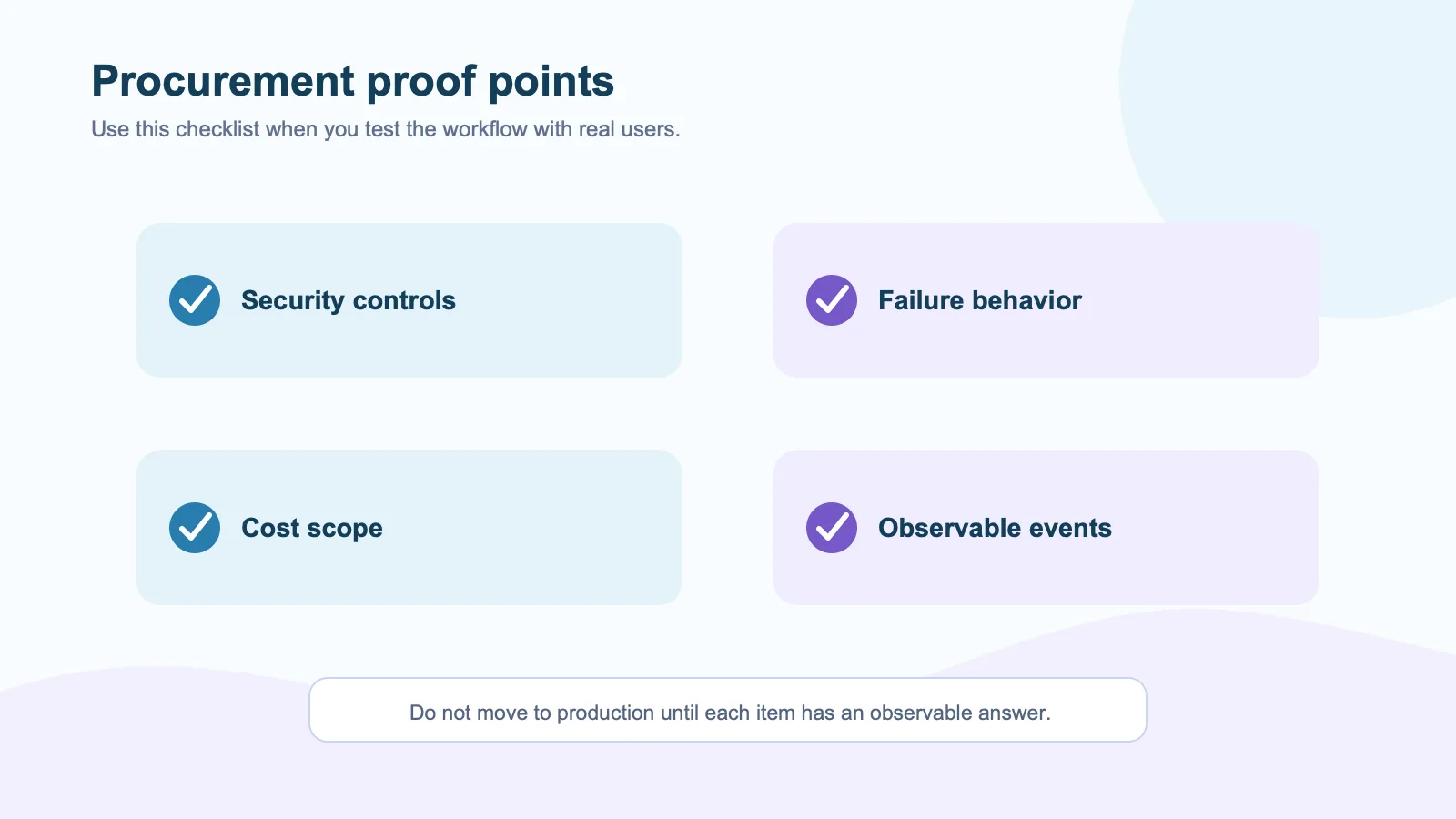
Choose the platform that lets you prove one valuable user moment while retaining the controls your business already depends on. A larger bundled offering may be right for a greenfield pilot. A composable avatar layer may be right where your agent stack, data model, and policy controls are already mature.
Do not approve an enterprise deployment based on a face. Approve it based on the workflow behind the face.
External sources
- OWASP Top 10 for LLM Applications
- NIST AI Risk Management Framework
- LiveKit Agents documentation
- Tavus blog for enterprise conversational AI topics
- Anam blog for selection and implementation topics