

Synthesia Alternatives for Interactive AI Avatars in 2026
Synthesia is a strong choice for producing polished, asynchronous business video. Its product supports a large avatar library, custom avatars, localization, and enterprise video workflows. But a buyer looking for a Synthesia alternative for interactive AI avatars usually has a different job: put a live, responsive digital human inside a product, agent, training flow, or customer conversation. Those are not the same technical category.
Synthesia itself now describes interactive avatars as a separate capability that can connect to an LLM or agent, while its core video offering remains valuable for scripted communication. Read its avatar overview before treating every “AI avatar” provider as equivalent.
Quick verdict
| If you need… | Start with… | Why |
|---|---|---|
| Scripted training, localization, or internal video | Synthesia | Its video-production workflow is the point |
| A composable live avatar in an existing SaaS agent | Spatius | Your app keeps the agent; AvatarKit handles local rendering |
| A hosted conversational avatar with a developer API | Anam | It is purpose-built for real-time persona experiences |
| A bundled conversational-video stack | Tavus | CVI packages more of the conversation path |
| Interactive web avatars alongside a video toolset | HeyGen LiveAvatar | It is HeyGen’s dedicated live product |
Why teams move beyond a video-first workflow
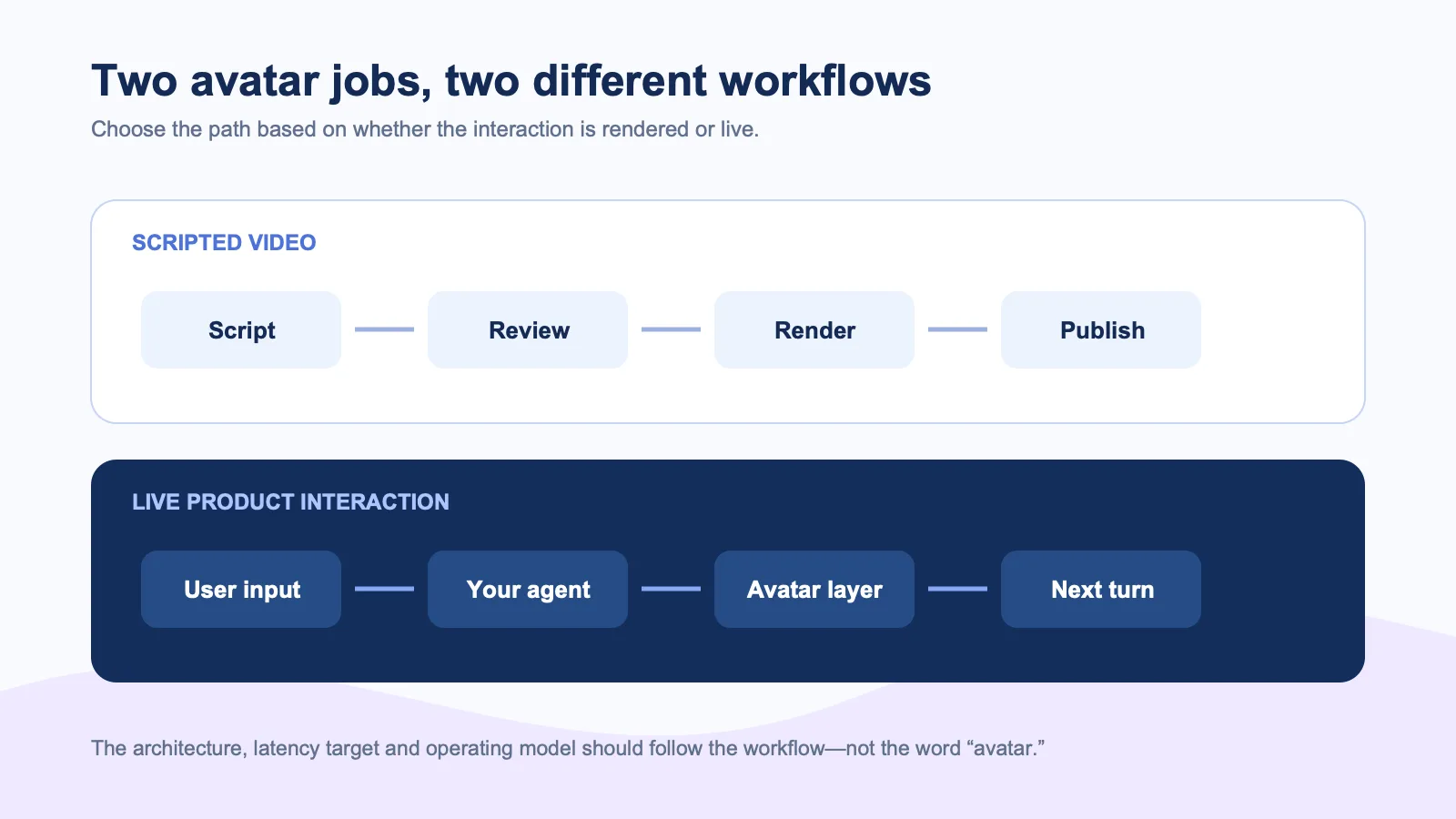
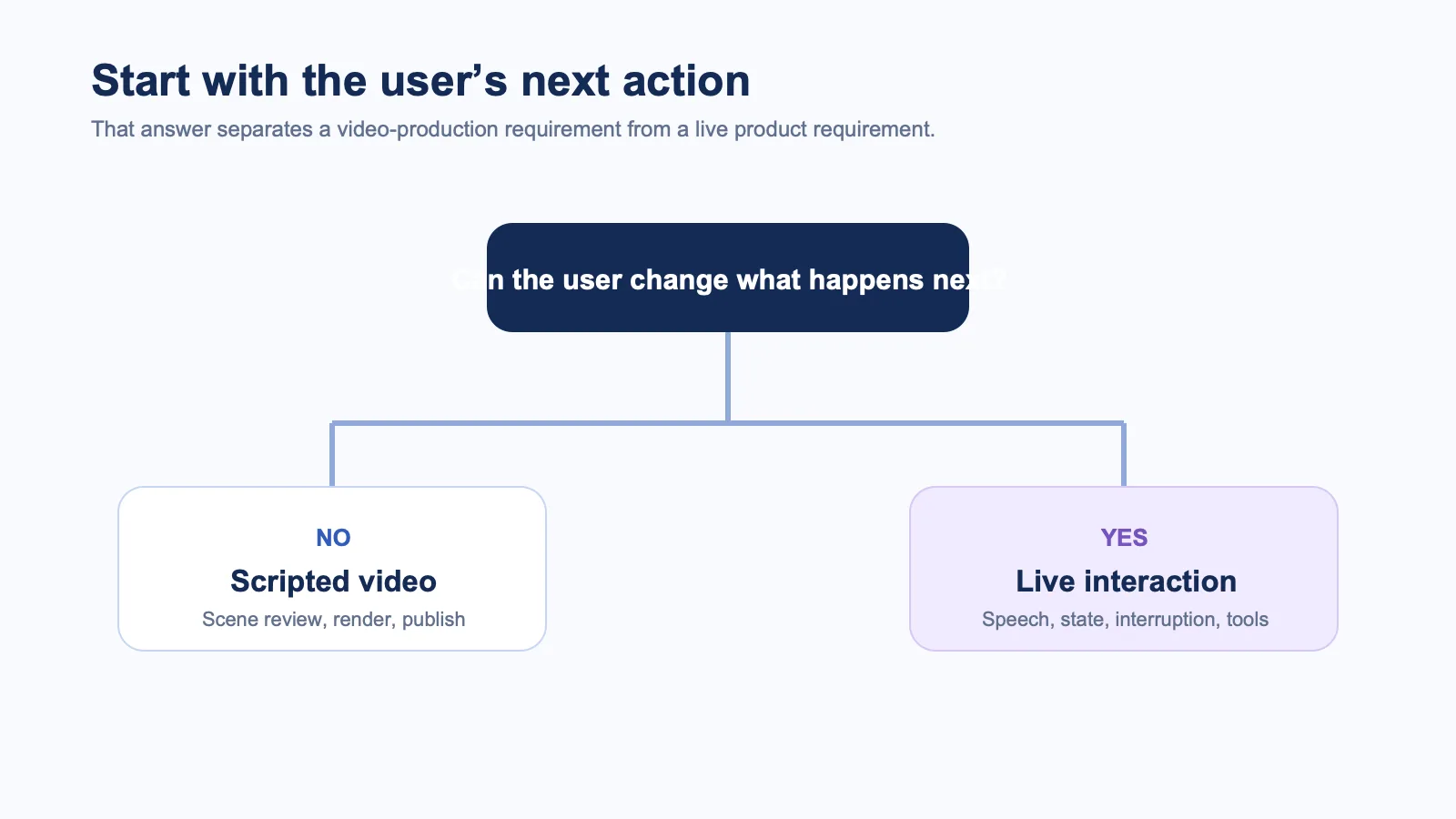
The tell is simple: can the user speak, interrupt, ask a follow-up, or trigger a tool action that changes what happens next? If the answer is yes, you are building a live interaction, not publishing a video asset.
That does not make scripted video obsolete. For a compliance module, internal announcement, course chapter, or translated product update, a completed video can be the cleanest format. Synthesia’s guide to making videos is a good illustration of that workflow: script, scenes, supporting visuals, generation, then publish.
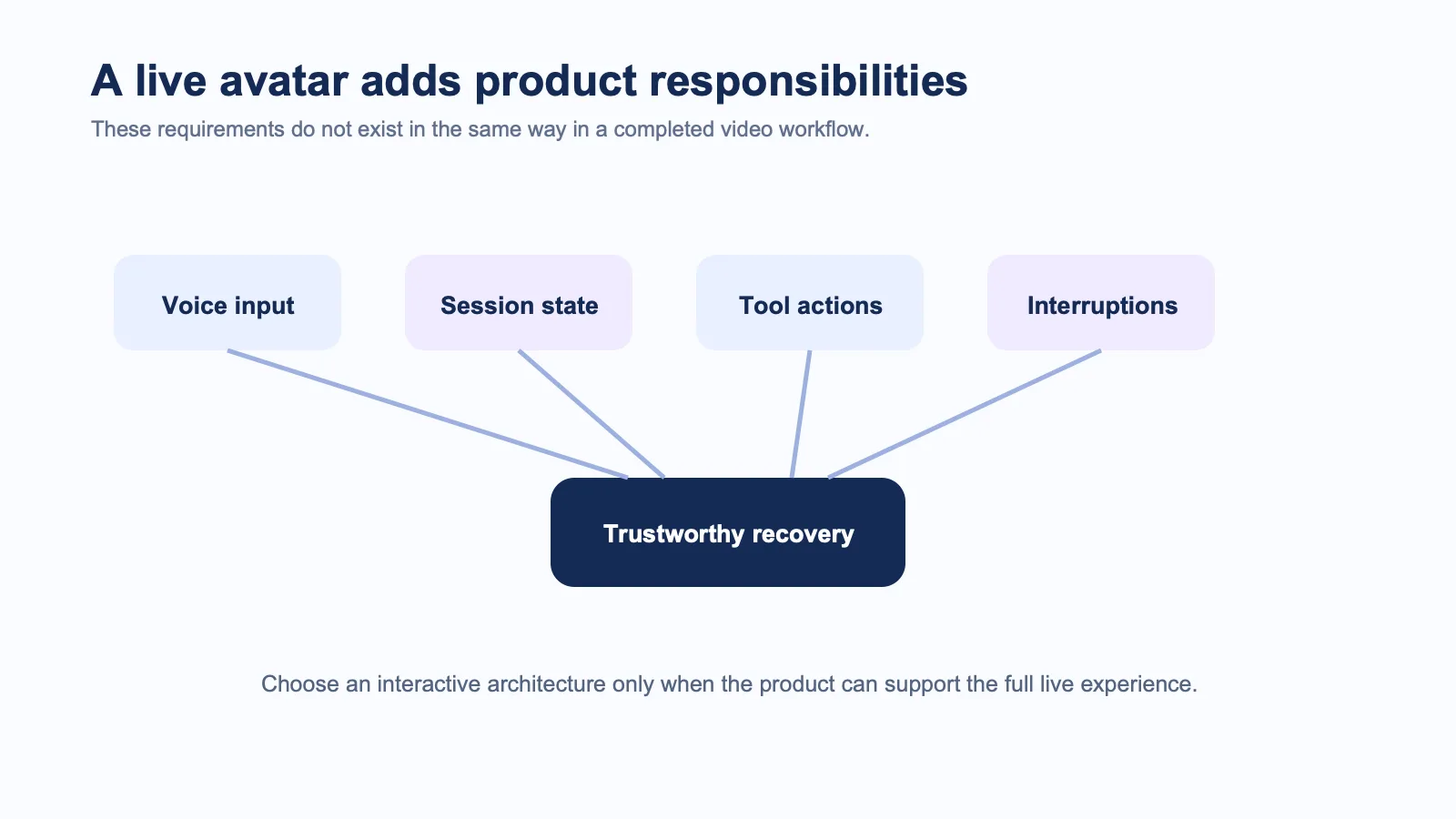
Live experiences add different requirements: a voice pipeline, session state, interruption rules, privacy decisions, tool calls, network recovery, and a way to render the avatar in the client. The selection criteria move from templates and export formats toward architecture and product integration.
1. Spatius: for products that already have an AI brain
Spatius is the alternative to evaluate when you do not want to replace your agent stack. The product boundary is intentionally narrow: Motion Server turns avatar speech audio into motion data; AvatarKit loads and renders the avatar locally. Your own app, backend, or agent framework retains ASR, LLM, TTS, retrieval, permissions, tool use, and conversation policy. The Spatius docs map makes that separation explicit.
This is a useful fit for a SaaS product that has already invested in its own intelligence layer. Rather than move a workflow into a video studio, the team can add a visual output to a product surface. For example, the documented LiveKit path connects an agent worker to Motion Server and renders the result in a Web client.
Choose Spatius for a real-time product integration, not for a no-code video-production workflow. It is not the better option if the only requirement is “turn this approved script into 20 localized training videos.”
2. Anam: for a hosted conversational avatar
Anam is worth testing when the product needs a hosted, real-time avatar experience. Its own LiveKit example frames the integration as adding a visual layer to a voice agent without replacing the team’s chosen LLM.
The difference from a video-first studio is operational. You are now measuring sessions, concurrent users, turn-taking, and the experience between responses. Anam’s public pricing page lists included minutes, concurrency, conversation limits, and overage rates, which gives a practical starting point for a pilot budget.
3. Tavus: for an all-in-one conversational video route
Tavus is a fit when the buyer wants a vendor-managed Conversational Video Interface rather than a thin visual layer. Its CVI overview describes the product as a real-time conversation with a Replica; the pricing page distinguishes those conversation minutes from asynchronous video generation.
That bundled approach can reduce initial assembly work. The trade-off is less separation between your agent architecture and the avatar vendor’s conversational components. Ask whether your product needs that bundled stack before comparing headline per-minute rates.
4. HeyGen LiveAvatar: for teams using HeyGen beyond live interaction
HeyGen’s LiveAvatar introduction identifies it as the production successor to Interactive Avatar. It is a logical candidate if your team already uses HeyGen’s video, translation, or digital-twin products and wants a live extension.
Be precise about billing. HeyGen’s API pricing documentation covers generated output, while the LiveAvatar product has its own credits and deployment modes. The LiveAvatar getting-started page shows why: Lite and Full methods do not consume credits in the same way.
How to make the decision
Use a video platform if the output is a finished, reviewable asset. Use a real-time avatar platform if the avatar is one participant in a product interaction.
Then ask four concrete questions:
- Who owns the agent logic? If it is your application, favor a composable layer.
- What reaches the browser? Compare a finished media stream with locally rendered avatar output.
- How is usage billed? Check minutes, minimums, concurrency, and the included scope.
- What must happen when the user interrupts? Test it in the actual voice-agent flow, not a prerecorded demo.
The bottom line
Synthesia is still the right choice for high-quality asynchronous business video. It becomes the wrong comparison point when the requirement is a live AI agent that listens and responds. In that case, shortlist Spatius, Anam, Tavus, and HeyGen LiveAvatar based on whether you need a composable rendering layer, a hosted persona, or a bundled conversation platform.
Suggested CTA: Talk to Spatius about adding a real-time avatar layer to an existing SaaS or voice-agent workflow.